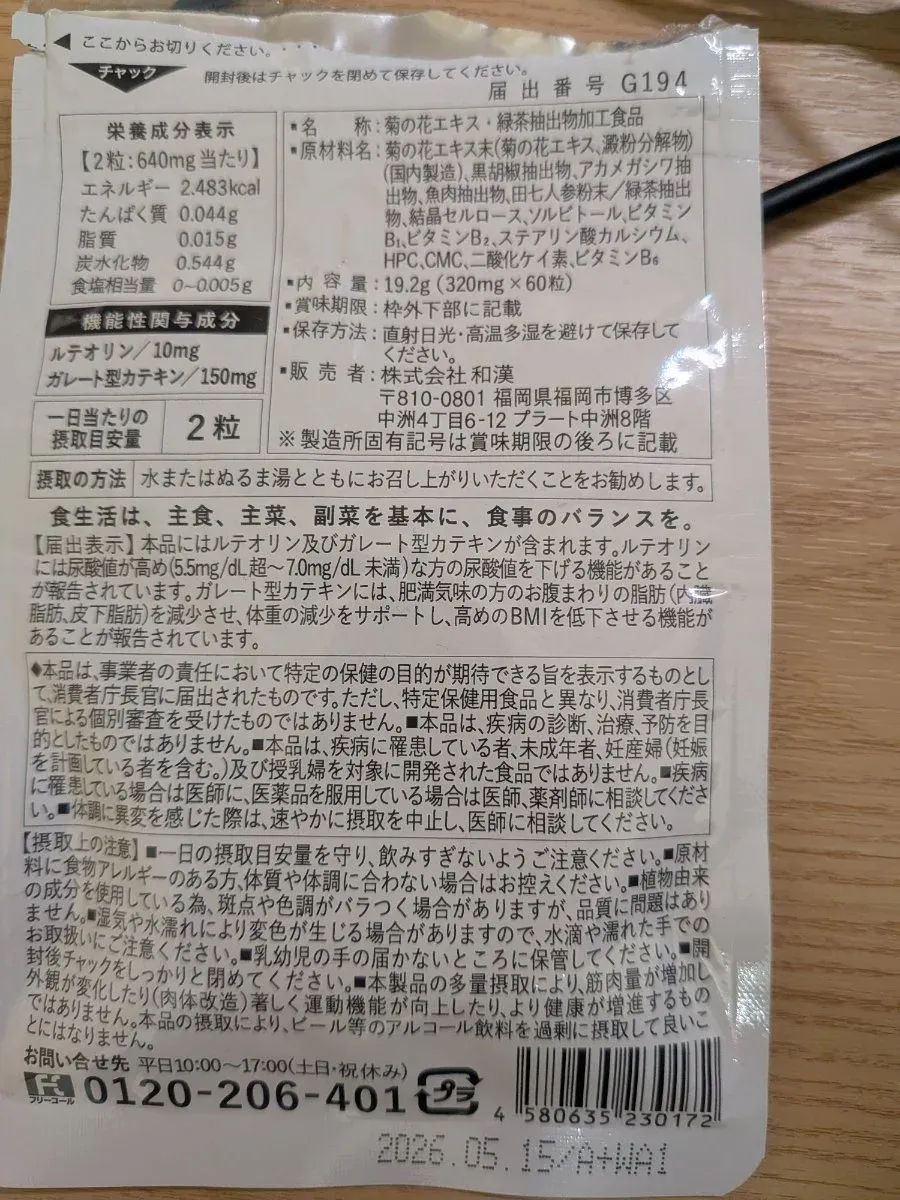
菊の花&カテキンの恵み by 和漢 combines luteolin, derived from chrysanthemum flowers (菊の花), and green tea catechins, particularly epigallocatechin gallate (EGCG), into a nutraceutical blend targeting oxidative stress, neuroinflammation, and cardiovascular health. The product positions luteolin as a key neuroprotective agent, drawing from its ability to cross the blood-brain barrier and modulate pathways involved in Alzheimer’s and Parkinson’s disease in pre-clinical models. However, the 10 mg dose falls far below the 50–100 mg range used in animal and mechanistic studies, limiting its likely clinical impact.
Catechin, provided at 150 mg per serving, contributes antioxidant effects, particularly in protecting LDL particles from oxidation—a key step in atherosclerosis prevention [1]. While acute supplementation with 300 mg EGCG has improved endothelial function in coronary artery disease patients [2], this product delivers less than half that amount. Despite both ingredients showing favorable safety profiles at these doses, the formulation appears optimized for general wellness rather than targeted therapeutic intervention, with neither primary ingredient reaching clinically validated levels for their most robust indications.
Quick Summary
Full transparency: all ingredient amounts are disclosed with no proprietary blends, enabling accurate evaluation of dosing and safety.
Efficacy is limited by sub-therapeutic dosing of both primary and supporting ingredients. Luteolin at 10 mg is only 20% of the clinical midpoint, and catechin at 150 mg is 50%. While mechanistic data are strong, human clinical evidence at these doses is lacking, reducing likelihood of measurable benefit.
Standard forms of luteolin and catechin are used; bioavailability is moderate with peak plasma levels within 1–2 hours [4]. No enhanced absorption technologies (e.g., phospholipid complexes) are indicated, but doses are low enough to minimize absorption limitations.
Generally safe at provided doses, but luteolin’s estrogenic activity and catechin’s hepatotoxic potential at high doses require caution. No warnings included on label, limiting risk communication.
Suggested: 5 servings/day to reach clinical midpoint
Why Take This Product
Key Benefits
- Antioxidant Protection: Both luteolin and catechin scavenge reactive oxygen species and enhance endogenous antioxidant systems. Catechins incorporate into LDL particles, reducing oxidation and early atherosclerotic risk in humans [1].
- Cardiovascular Function: Catechin, particularly EGCG, improves endothelial function acutely in patients with coronary artery disease [2], though effects are dose-dependent and may be limited at 150 mg.
Who Should Take This
Potential Side Effects
Ingredient Breakdown
The formulation features two flavonoids: luteolin, derived from chrysanthemum flowers, and catechin from green tea. Luteolin is highlighted in the product name and is classified as a primary ingredient due to its prominence in branding and proposed neuroprotective benefits. Catechin, while present in higher quantity, is considered supporting due to its secondary role in the product’s naming and positioning.
Primary Ingredients
Luteolin
Neuroprotection, anti-inflammatory, antioxidant
Dose is 10 mg, well below the 50–100 mg range used in neuroprotection studies. Despite being named in the product title and classified as primary, it delivers only 20% of the clinical midpoint (75 mg). Endocrine activity necessitates caution in sensitive populations.
A flavonoid with strong pre-clinical evidence for neuroprotection via reduction of neuroinflammation, mitochondrial protection, and induction of mitophagy. Acts as an estrogen agonist and progesterone antagonist, raising potential endocrine concerns [3].
Supporting Ingredients
There is 1 supporting ingredient.
Practical Recommendations
- Combine With Dietary Sources: Enhance flavonoid intake through foods: celery, peppers, and chamomile for luteolin; green tea, apples, and berries for catechins. Dietary intake may contribute 40–60% of total flavonoid exposure in supplement users.
- Monitor Hormonal And Liver Health: Due to luteolin’s estrogenic activity and catechin’s hepatotoxic potential at high doses, periodic liver function tests and awareness of hormonal symptoms are prudent with long-term use.
Is it Safe?
Both ingredients have favorable safety profiles at the doses used. However, luteolin’s endocrine-disrupting potential as a progesterone antagonist and estrogen agonist warrants caution in hormone-sensitive populations. Catechin, while generally safe, requires monitoring in high doses due to hepatotoxicity risk. This product’s low dose reduces such risks but does not eliminate theoretical concerns.
Safety & Considerations
- Hormonal: Luteolin acts as a progesterone antagonist and estrogen agonist; avoid in hormone-sensitive conditions such as breast cancer or endometriosis [3].
- Hepatic: Green tea extracts, particularly EGCG, have been associated with liver injury at high doses (>800 mg/day); monitor liver function with long-term use.
- Gastrointestinal: Take with food to reduce risk of nausea or gastric irritation, especially with catechin-containing supplements.
The Science
Efficacy is limited by sub-therapeutic dosing of both primary ingredients. Luteolin at 10 mg is only 10–20% of the 50–100 mg range studied for neuroprotection. Catechin at 150 mg is below the 300–400 mg range shown to improve endothelial function. While flavonoids contribute to long-term health when consumed through diet, isolated supplementation at these levels may offer only marginal benefits beyond a polyphenol-rich diet.
Green tea catechins incorporate into LDL and prevent oxidation in humans after acute intake.
Acute EGCG supplementation (300 mg) improves endothelial function in coronary artery disease patients.
Luteolin acts as a progesterone antagonist and potent estrogen agonist, indicating endocrine-disrupting activity.
Green tea extract increases plasma catechin levels and antioxidant capacity within hours.
Luteolin targets multiple signaling pathways in Alzheimer’s and Parkinson’s disease models, showing strong neuroprotective potential.
See grades while you shop
Get instant supplement ratings directly on iHerb. Amazon & more coming soon.
Works on iHerb now, Amazon & more coming soon
Stay updated on supplement research
Get newsletters about the latest developments in supplements and evidence-based insights.
No spam. Unsubscribe anytime.
Want another product analyzed?
Scan any supplement label for a free analysis