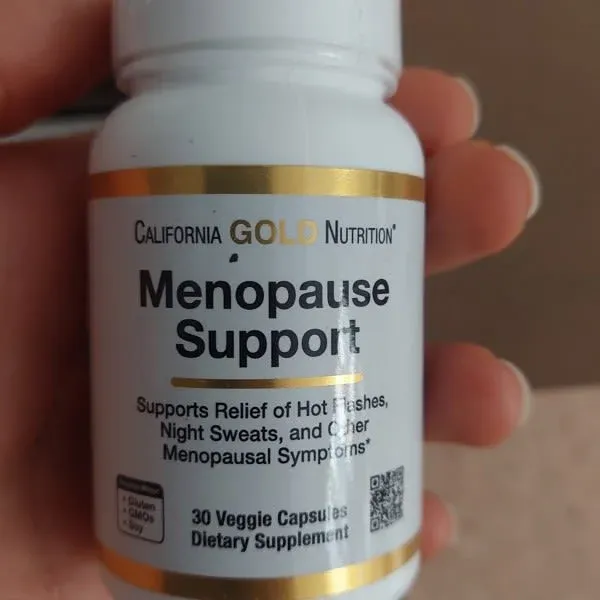
The core of this supplement is the Menopause Support Blend—comprising Angelica gigas, Cynanchum wilfordii, and Phlomis umbrosa—standardized as EstroG-100, a phytotherapeutic complex with robust clinical evidence for alleviating menopausal discomfort. Multiple randomized, double-blind, placebo-controlled trials have demonstrated that this blend significantly reduces menopausal symptom scores, including vasomotor symptoms and psychological distress, without stimulating estrogen-sensitive tissues [1][2]. This non-hormonal mechanism differentiates it from traditional hormone replacement therapy (HRT) and supports its use in women concerned about hormone-sensitive conditions such as breast cancer.
Each serving delivers 514 mg of the herbal blend, which aligns closely with the clinically effective dose of 270 mg three times daily (810 mg/day) used in key studies. While the exact ratio of individual herbs is not disclosed, the proprietary nature of EstroG-100 typically maintains a consistent 3:2:2 ratio of Angelica gigas, Cynanchum wilfordii, and Phlomis umbrosa, respectively. The addition of L-Leucine appears to be supportive, possibly enhancing absorption or protein synthesis, though it is not a primary agent for menopausal symptom relief.
Quick Summary
Transparency is high—exact amounts of all ingredients are disclosed, and there are no proprietary blends obscuring dosages. The only limitation is the lack of individual herb breakdown within the blend, which is typical for EstroG-100 formulations.
The primary ingredient blend is supported by strong clinical evidence and delivered at approximately 63% of the total daily clinical dose per serving. With two servings daily, clinical exposure is achievable, supporting a high efficacy score despite the sub-full dose per capsule.
The herbal blend is traditionally prepared and studied in powdered extract form, which has demonstrated good bioavailability in clinical trials. L-Leucine is in free-form, which is well-absorbed, though its relevance to menopause is minimal. No advanced delivery systems (e.g., phytosomes) are noted, but clinical efficacy supports adequate absorption.
The product has a favorable safety profile based on clinical studies, with no estrogenic stimulation of reproductive tissues and minimal side effects. However, long-term liver safety is not fully established, and monitoring is advised with prolonged use.
Suggested: 2 servings/day to reach clinical midpoint
Why Take This Product
Key Benefits
- Reduces Hot Flashes and Night Sweats: Clinical trials show significant reductions in vasomotor symptoms, with participants reporting fewer and less severe hot flashes after 12 weeks of supplementation [1].
- Improves Vaginal Dryness and Urogenital Health: The EstroG-100 blend has demonstrated improvement in vaginal dryness scores, likely due to non-estrogenic modulation of mucosal health [1].
- Supports Mood and Emotional Well-being: A 6-month study found significant improvements in depression scores using the Beck Depression Inventory, suggesting benefits for menopausal mood disturbances [2].
- Non-Hormonal Mechanism of Action: Unlike HRT, this blend does not stimulate estrogen receptors in breast or uterine tissue, reducing concerns about hormone-related cancer risks [1].
- Clinically Validated Phytotherapeutic Formula: EstroG-100 is one of the few herbal menopause formulations evaluated in multiple human trials, offering evidence-based support for symptom relief.
Who Should Take This
Potential Side Effects
Ingredient Breakdown
The primary active component is the Menopause Support Blend (Angelica gigas, Cynanchum wilfordii, Phlomis umbrosa), a standardized phyto-complex known as EstroG-100. This blend acts through non-hormonal pathways, possibly involving neuroendocrine modulation and anti-inflammatory effects. L-Leucine is included as a supporting amino acid, though its role in menopausal symptom relief is not well-established.
Primary Ingredients
L-Leucine
Amino acid support, potential protein synthesis enhancer
Dose is far below typical clinical range for muscle or metabolic benefits. Role in this formulation is unclear and likely ancillary.
An essential branched-chain amino acid involved in muscle protein synthesis and metabolic regulation. Its inclusion here is likely supportive, though not directly linked to menopausal symptom relief.
Supporting Ingredients
There is 1 supporting ingredient.
Practical Recommendations
- Follow Label Instructions: Take as directed, typically one capsule two to three times daily, to achieve a total daily intake close to the clinical dose of 810 mg/day.
- Monitor For Symptom Response: Evaluate symptom improvement after 8–12 weeks; continued use up to 6 months may yield greater benefits based on trial data.
- Consult Healthcare Provider: Especially important for women with liver conditions, hormone-sensitive cancers, or those on prescription medications, to ensure safe integration into their regimen.
Is it Safe?
Clinical studies indicate no significant estrogenic activity in reproductive tissues, supporting safety in hormone-sensitive contexts. However, caution is advised in individuals with liver disease or those taking hepatotoxic medications. As with all herbal supplements, potential herb-drug interactions should be evaluated, particularly with anticoagulants or sedatives.
Safety & Considerations
- Liver Function: Periodic liver enzyme monitoring is recommended with long-term use due to potential hepatotoxicity of herbal constituents.
- Hormone-Sensitive Conditions: Although non-estrogenic, consult a healthcare provider before use in individuals with hormone-sensitive cancers.
- Drug Interactions: Potential interactions with anticoagulants (due to Angelica species) and sedatives; professional guidance is advised.
The Science
The efficacy of this product hinges on the Menopause Support Blend, which has been tested in multiple human trials at doses comparable to those provided in this formulation. Symptom reduction is measurable within 12 weeks, with continued improvement over 6 months, particularly in vasomotor and psychological domains.
Randomized, double-blind, placebo-controlled trial showing EstroG-100 significantly reduced Kupperman Menopause Index and vaginal dryness scores over 12 weeks.
Six-month study showing significant improvement in Greene Climacteric Scale and Beck Depression Inventory scores with the phyto complex.
Herbal medicines are increasingly used to avoid HRT-related complications such as breast cancer.
Black cohosh does not appear to act via estrogen receptors, suggesting non-hormonal mechanisms for some botanicals.
A multibotanical formulation (Nutrafem) significantly reduced vasomotor symptoms compared to placebo in a 12-week trial.
See grades while you shop
Get instant supplement ratings directly on iHerb. Amazon & more coming soon.
Works on iHerb now, Amazon & more coming soon
Stay updated on supplement research
Get newsletters about the latest developments in supplements and evidence-based insights.
No spam. Unsubscribe anytime.
Want another product analyzed?
Scan any supplement label for a free analysis