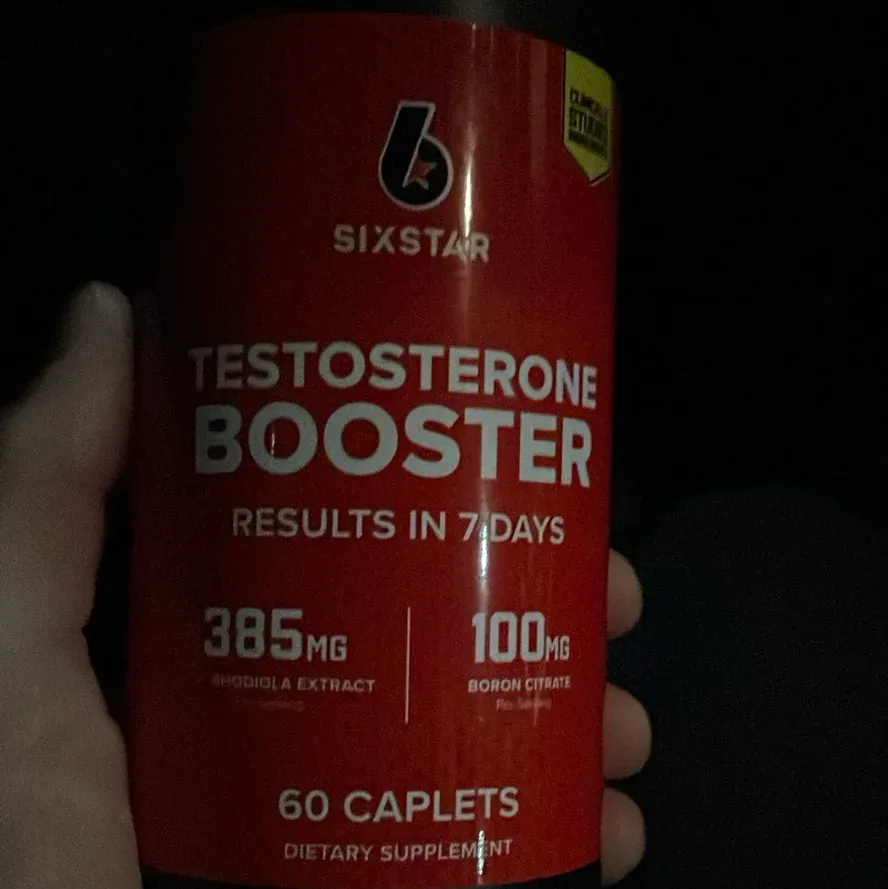
The SIXSTAR TESTOSTERONE BOOSTER is marketed as a dietary supplement aimed at enhancing testosterone levels, energy, and physical performance. The formulation centers around Rhodiola extract (385 mg), an adaptogen traditionally used to improve resilience to physical and mental stress. While Rhodiola has been studied for its potential to modulate the hypothalamic-pituitary-adrenal (HPA) axis and reduce fatigue—factors indirectly related to hormonal balance—there is no robust clinical evidence demonstrating that Rhodiola directly increases serum testosterone levels in healthy men.
Other ingredients include high-dose thiamin (50 mg), minimal sodium (10 mg), low-dose ginkgo (2.8 mg), and a very high dose of boron (100 mg). None of these have strong, consistent evidence for boosting testosterone, and several are either far below or far above clinically relevant doses for their established uses. The product lacks key evidence-based ingredients commonly associated with testosterone support, such as D-aspartic acid, ashwagandha, or zinc. As a result, the formulation appears misaligned with current scientific understanding of hormonal optimization.
Quick Summary
All ingredients are fully disclosed with exact amounts, and there are no proprietary blends. This ensures complete transparency for consumers and clinicians.
Rhodiola is the only primary ingredient and is dosed at 77% of the clinical midpoint (385 mg vs. 400 mg), which may support fatigue reduction. However, no ingredient has strong evidence for boosting testosterone, and key components like ginkgo are severely underdosed. Overall efficacy for the stated purpose is low.
Rhodiola and thiamin are in standard, absorbable forms. However, ginkgo is severely underdosed, and boron's form (not specified) may affect absorption. Overall bioavailability is moderate but limited by inappropriate dosing.
The 100 mg boron dose exceeds the EFSA upper limit (20 mg/day) and poses potential reproductive risks based on animal data. Rhodiola may interact with antidepressants. High thiamin is safe, but excessive boron undermines overall safety.
Suggested: 2 servings/day to reach clinical midpoint
Why Take This Product
Key Benefits
- Stress and Fatigue Reduction: Rhodiola extract (385 mg) falls within the 300–500 mg/day range studied for reducing mental and physical fatigue, particularly under stressful conditions [1]. It may help improve focus and endurance during prolonged exertion.
- Metabolic and Bone Health (Theoretical): Boron (100 mg) is included at an extremely high dose compared to typical intake (1–3 mg/day) or therapeutic range (3–6 mg/day). While animal studies suggest roles in bone metabolism and inflammation, human data are limited and such high doses raise safety concerns [4][5].
Who Should Take This
Potential Side Effects
Ingredient Breakdown
The formulation includes five ingredients: Rhodiola extract (385 mg), thiamin (50 mg), sodium (10 mg), ginkgo extract (2.8 mg), and boron (100 mg). Rhodiola is the only ingredient plausibly linked to hormonal modulation via stress adaptation, while others play minor or unrelated roles in testosterone physiology.
Primary Ingredients
Rhodiola extract
Adaptogen, fatigue reduction, HPA axis modulation
Dosed at 385 mg, within the 300–500 mg/day range studied for fatigue and mental performance [1]. While well-tolerated, clinical trials show mixed results due to methodological flaws. No direct evidence supports testosterone elevation.
Standardized Rhodiola extract is used for its salidroside and rosavin content, supporting resilience to stress and reducing mental and physical fatigue. It may indirectly influence hormonal balance via stress modulation.
Supporting Ingredients
There are 4 supporting ingredients.
Practical Recommendations
- Consider Alternative Testosterone Support: For evidence-based testosterone support, consider supplements containing ashwagandha (300–600 mg/day of standardized root extract), which has shown increases in testosterone and sperm parameters in clinical trials , or D-aspartic acid (2–3 g/day), though results are mixed.
- Optimize Lifestyle Factors: Testosterone levels are most effectively improved through resistance training, adequate sleep, stress management, and maintaining healthy body composition. Supplements should complement—not replace—these foundational practices.
Is it Safe?
While most ingredients are safe at typical doses, the 100 mg boron content raises significant safety concerns due to lack of human safety data at this level and evidence of reproductive toxicity in animals. Rhodiola may interact with antidepressants, and high-dose thiamin, while low-risk, offers no added benefit. Overall, the safety profile is compromised by excessive boron dosing.
Safety & Considerations
- High Dose: Boron (100 mg) is 5x above EFSA tolerable upper intake level (20 mg/day); long-term use may pose reproductive or developmental risks.
- Interaction: Rhodiola may interact with SSRIs, MAOIs, and antipsychotics due to potential monoamine modulation; use with caution in psychiatric conditions.
- Timing: Rhodiola may cause insomnia if taken late in the day due to mild stimulant effects.
Reports for Similar Products
The Science
Efficacy is limited by the absence of clinically effective doses of evidence-based testosterone-supporting ingredients. Rhodiola, while dosed reasonably for adaptogenic effects, lacks direct evidence for boosting testosterone. Other ingredients are either too low (ginkgo) or misaligned with hormonal goals (boron, thiamin), resulting in a product with minimal scientific support for its primary claim.
Critical review found significant methodological flaws in most Rhodiola trials; several high-quality studies showed no significant effect on fatigue or cognition.
Adjuvant thiamine (100 mg/day) significantly improved depressive symptoms in patients with major depressive disorder over 8 weeks.
Standardized Ginkgo biloba extract (EGb 761) shows benefit in stabilizing or slowing cognitive decline in patients with dementia.
Boron supplementation increased estrogen-induced urinary calcium excretion but had minimal effect on serum minerals or osteocalcin in ovariectomized rats.
Boron supplementation in drinking water altered bone and teeth mineral density in rabbits, with effects dependent on chemical form and diet composition.
See grades while you shop
Get instant supplement ratings directly on iHerb. Amazon & more coming soon.
Works on iHerb now, Amazon & more coming soon
Stay updated on supplement research
Get newsletters about the latest developments in supplements and evidence-based insights.
No spam. Unsubscribe anytime.
Want another product analyzed?
Scan any supplement label for a free analysis