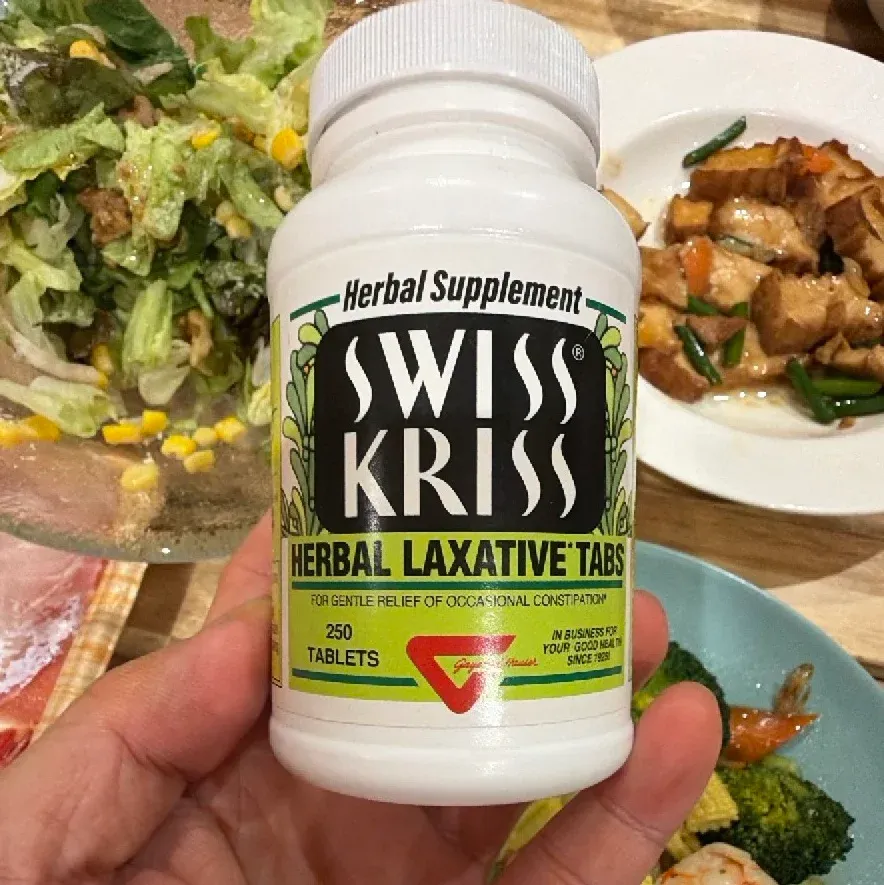
SWISS KRISS HERBAL LAXATIVE 'TABS is a pharmaceutical-grade stimulant laxative whose primary active ingredient is senna, standardized to contain 8.5 mg of sennosides per tablet. Sennosides, the bioactive compounds in senna, are metabolized by gut microbiota into rhein anthrones, which stimulate colonic peristalsis and inhibit water reabsorption, thereby promoting bowel movements. This mechanism is well-supported by clinical evidence and aligns with established use in both adult and pediatric populations for the short-term management of constipation [1][2].
As a pharmaceutical product, SWISS KRISS is designed for targeted, dose-controlled intervention rather than nutritional supplementation. The formulation focuses exclusively on senna as the therapeutic agent, with no additional herbal or functional ingredients reported. Its use in bowel preparation regimens, including for colonoscopy, demonstrates efficacy comparable to other standard preparations when used in appropriate dosing schedules [3][4]. However, long-term use is discouraged due to risks of electrolyte imbalance, laxative dependence, and melanosis coli.
Quick Summary
Full transparency is demonstrated with the exact amount of active ingredient (8.5 mg sennosides) clearly disclosed. There are no proprietary blends or hidden components, which is essential for a pharmaceutical product.
The primary ingredient, senna, is present in a dose that allows for clinical efficacy when multiple tablets are taken (e.g., 3 tablets = 25.5 mg sennosides), falling within the therapeutic range of 17.2–34.4 mg/day. Evidence supports its effectiveness for constipation and bowel prep, justifying a high efficacy score despite sub-maximal single-tablet dosing.
Sennosides are prodrugs activated by colonic microbiota, ensuring targeted release and high local bioavailability. The standardized extract form used in SWISS KRISS is well-absorbed in terms of pharmacological effect, though systemic absorption is minimal—ideal for a gut-acting agent.
Senna is generally safe for short-term use but carries risks of hypokalemia, drug interactions, and dependence with prolonged use. Contraindications include bowel obstruction and IBD. Warnings are necessary for elderly and renal-impaired patients.
Suggested: 3 servings/day to reach clinical midpoint
Why Take This Product
Key Benefits
- Useful in Bowel Preparation: Regimens including senna have demonstrated high-quality colon cleansing, comparable to PEG-based solutions. For example, 24 tablets of 12 mg senna were found to be as effective as 4-L PEG-ES for colonoscopy preparation [4].
- Potential Adjunct in Hyperkalemia Management: Senna glycoside at 8.6 mg twice daily significantly reduced serum potassium levels in hemodialysis patients by decreasing colonic potassium reabsorption, suggesting a role in managing chronic hyperkalemia [7].
Who Should Take This
Potential Side Effects
Ingredient Breakdown
The formulation contains senna as the sole active ingredient, standardized to deliver a consistent 8.5 mg of sennosides per tablet. No supporting ingredients are listed, indicating a focused pharmacological approach without adjunctive botanicals or excipients intended for therapeutic effect.
Primary Ingredients
Senna
Stimulant laxative
Clinical dose midpoint: 25.8 mg/day. At 8.5 mg per tablet, 3 tablets are needed to reach midpoint. Dose used in hemodialysis for potassium control: 8.6 mg twice daily (close to one tablet per dose). Pediatric dosing is titrated to effect, often starting low. High-dose regimens (e.g., 288 mg for colonoscopy) require medical supervision.
Senna contains sennosides A and B, which are metabolized by colonic bacteria into active aglycones that stimulate peristalsis and fluid secretion in the colon. This leads to accelerated transit and defecation. Standardization ensures consistent potency across batches.
Practical Recommendations
- Limit Duration Of Use: Use SWISS KRISS for no more than one week to minimize the risk of electrolyte disturbances, dependency, and melanosis coli. If constipation persists, consult a healthcare provider.
- Monitor For Electrolyte Imbalance: Patients using diuretics, digoxin, or corticosteroids should be cautious due to the risk of hypokalemia. Consider periodic electrolyte monitoring in long-term or high-dose use, even if brief.
- Avoid In Certain Conditions: Do not use in cases of intestinal obstruction, Crohn’s disease, ulcerative colitis, or undiagnosed abdominal pain. Senna can exacerbate underlying inflammatory or obstructive conditions.
Is it Safe?
While senna is safe for short-term use, it carries important contraindications and risks with prolonged or excessive intake. Caution is advised in elderly patients, those with renal impairment, or individuals on medications affected by electrolyte shifts. Animal studies show kidney weight increases and systemic toxicity at very high doses (≥750 mg/kg/day), underscoring the importance of adherence to recommended dosing [5].
Safety & Considerations
- Duration: Do not use for more than one week without medical supervision due to risk of laxative dependence and electrolyte imbalance.
- Contraindication: Contraindicated in intestinal obstruction, inflammatory bowel disease, and undiagnosed abdominal pain.
- Interaction: May interact with diuretics, digoxin, and corticosteroids due to hypokalemia risk.
- Special Population: Use with caution in elderly patients and those with renal impairment; monitor electrolytes if used repeatedly.
Reports for Similar Products

The Science
The efficacy of SWISS KRISS is anchored in the clinical performance of sennosides, with each tablet delivering a dose within the therapeutic range for constipation. When taken in multiples, the total sennoside intake can reach levels proven effective in bowel preparation and pediatric constipation management, supporting its classification as a clinically effective pharmaceutical laxative.
Senna's active compounds, sennosides, stimulate colonic motility and fluid secretion via bacterial metabolism into active aglycones.
Senna-based laxatives were titrated to effect in children with idiopathic constipation, achieving daily bowel movements.
180 mg senna tablets were as effective as sodium phosphate solution for colonoscopy preparation.
High-dose senna (24 tablets of 12 mg) was comparable to 4-L PEG-ES for colonoscopy prep quality and patient acceptance.
High-dose senna (750–1500 mg/kg/day) caused reduced weight gain, electrolyte changes, and kidney weight increases in rats over 13 weeks.
See grades while you shop
Get instant supplement ratings directly on iHerb. Amazon & more coming soon.
Works on iHerb now, Amazon & more coming soon
Stay updated on supplement research
Get newsletters about the latest developments in supplements and evidence-based insights.
No spam. Unsubscribe anytime.
Want another product analyzed?
Scan any supplement label for a free analysis