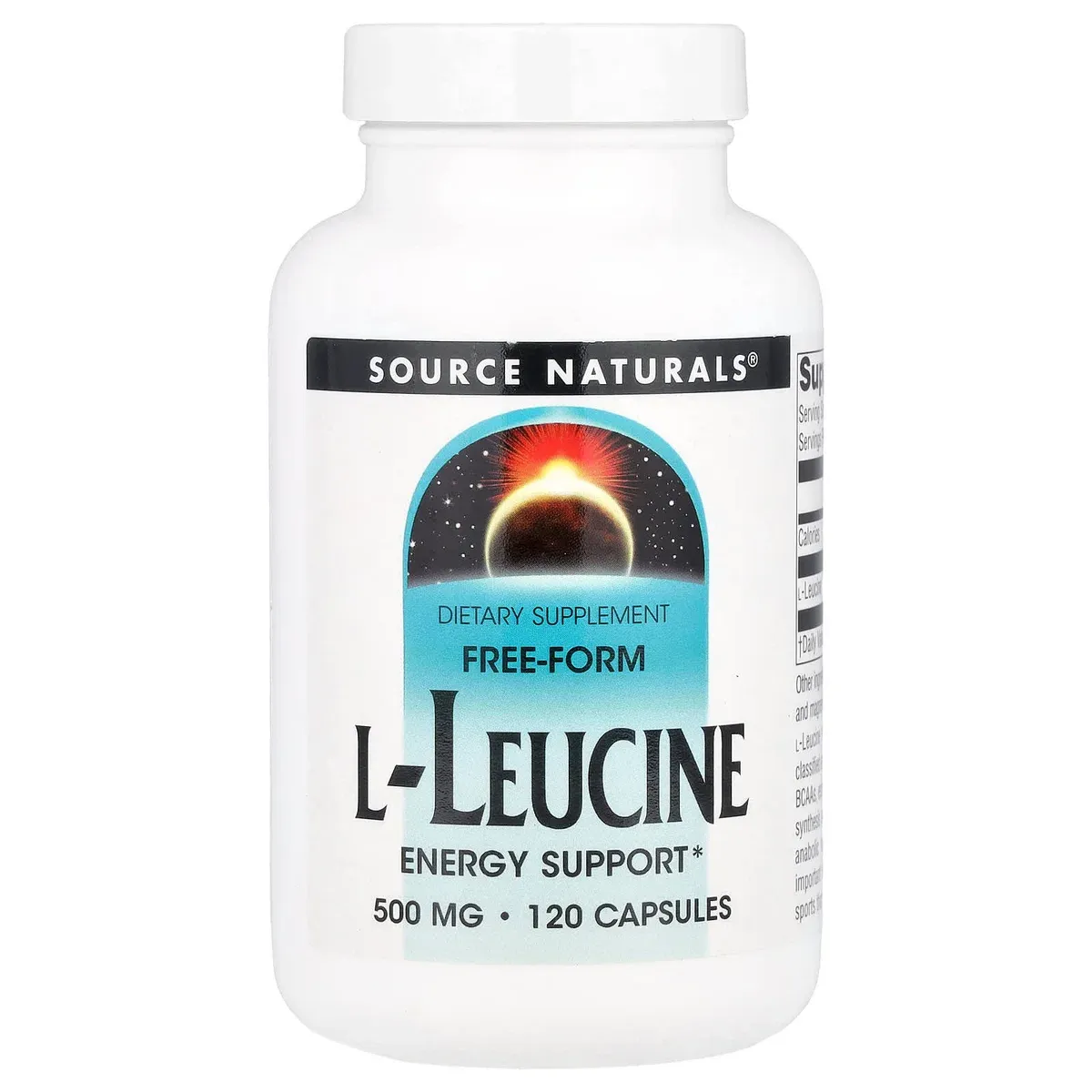
L-Leucine is one of the three branched-chain amino acids (BCAAs) and stands out as a primary regulator of muscle protein synthesis (MPS), acting both as a substrate and a signaling molecule. It activates the mTOR pathway, a central mechanism in initiating translation and promoting muscle growth, making it a key target for interventions in sarcopenia, malnutrition, and age-related muscle loss. In older adults, where anabolic resistance diminishes the response to protein intake, leucine supplementation can enhance the utilization of dietary amino acids for muscle repair and growth.
This product delivers 1.5 g of free-form L-leucine per serving in its pure, unbound form, allowing for rapid absorption and targeted delivery. While this form offers high bioavailability and is commonly used in research settings, the dose falls short of the 3–5 g range consistently associated with measurable improvements in lean mass, strength, and physical performance in clinical trials. As such, while the formulation supports precise dosing, users may need multiple servings to reach evidence-based thresholds, particularly when aiming to augment low-protein meals or support resistance training adaptations.
Quick Summary
Full transparency: exact amount of L-Leucine is disclosed with no proprietary blends or hidden ingredients.
The primary ingredient, L-Leucine, is dosed below the clinical range (3–5 g/day), limiting its standalone efficacy. However, because it is the sole and named ingredient, and free-form leucine is highly bioavailable, efficacy improves if 2–3 servings are taken to reach target intake.
Free-form L-leucine is rapidly absorbed and highly bioavailable, earning a +10% credit over standard forms. This supports efficient delivery and quick plasma concentration rise, ideal for triggering mTOR signaling.
Generally safe at recommended doses, but contraindicated in maple syrup urine disease and may interact with levodopa. Long-term high-dose safety is not fully established, though no major adverse events reported in trials up to 6 g/day.
Suggested: 3 servings/day to reach clinical midpoint
Why Take This Product
Key Benefits
- Supports Muscle Protein Synthesis: L-Leucine activates the mTOR pathway, stimulating muscle protein synthesis after exercise or in catabolic states. A 5 g dose has been shown to maximize myofibrillar protein synthesis following resistance training, particularly in low-protein conditions [6].
- Potential Support in Chronic Liver Disease: BCAA supplementation, including leucine, may help counteract sarcopenia and malnutrition in patients with cirrhosis due to impaired amino acid metabolism [2].
- May Delay Muscle Wasting in Early Cancer Cachexia: Preliminary evidence suggests leucine can support protein anabolism in cancer patients before refractory cachexia develops, though benefits diminish in advanced stages [4].
Who Should Take This
Potential Side Effects
Ingredient Breakdown
This product contains only one active ingredient: L-Leucine. As the name suggests, it is a free-form, standalone amino acid designed for targeted supplementation. No additional supportive compounds are included.
Primary Ingredients
L-Leucine
Essential amino acid, mTOR activator, muscle protein synthesis stimulator
Dose is 1.5 g per serving; clinical midpoint is 4 g (from 3–5 g range), resulting in 50% of target dose. High bioavailability in free-form. Most studies use 3–5 g/day for sarcopenia or resistance training support.
L-Leucine is a branched-chain essential amino acid that serves as both a building block for proteins and a signaling molecule that activates the mTOR pathway, driving muscle protein synthesis. It is particularly effective in counteracting anabolic resistance in older adults and enhancing the response to low-protein meals.
Practical Recommendations
- Increase Servings To Reach Clinical Dose: To achieve the 3–5 g/day range used in most studies, take 2–3 servings of this product, ideally with meals or post-exercise. This is especially important for older adults or those with low protein intake.
- Combine With Resistance Training And Adequate Protein: Leucine works best when paired with physical activity and sufficient total protein (≥1.2 g/kg/day). Isolated leucine without adequate background protein may not yield significant muscle benefits.
- Time Dosing Around Exercise Or Low-Protein Meals: Take leucine with resistance workouts or add to low-protein meals to maximize the anabolic response, particularly in aging populations with anabolic resistance.
Is it Safe?
L-Leucine is safe for most individuals at recommended doses, but caution is warranted in specific populations. Those with maple syrup urine disease should avoid it entirely, and individuals on levodopa therapy should time doses appropriately. No adverse events were reported in major trials at clinical doses (up to 6 g/day), but long-term data are limited.
Safety & Considerations
- Contraindication: Do not use if you have maple syrup urine disease (MSUD).
- Drug Interaction: May interfere with levodopa absorption; separate dosing by at least 2–3 hours.
Reports for Similar Products
The Science
The efficacy of this product hinges on achieving a sufficient dose of leucine to activate mTOR signaling and stimulate muscle protein synthesis. While the free-form format ensures high bioavailability, the 1.5 g per serving dose is below the 3–5 g range consistently used in clinical studies, reducing its standalone effectiveness unless multiple servings are consumed.
Leucine supplementation improves sarcopenia-related parameters in older adults, including muscle mass and strength.
L-leucine and BCAA supplementation may improve malnutrition and sarcopenia in chronic liver disease.
5 g/day leucine with resistance training increased fat-free mass and strength in untrained midlife women.
Leucine acts as a signaling molecule to promote protein synthesis in cancer patients before refractory cachexia.
Leucine supplementation did not improve insulin sensitivity beyond resistance training in prefrail/frail older women.
See grades while you shop
Get instant supplement ratings directly on iHerb. Amazon & more coming soon.
Works on iHerb now, Amazon & more coming soon
Stay updated on supplement research
Get newsletters about the latest developments in supplements and evidence-based insights.
No spam. Unsubscribe anytime.
Want another product analyzed?
Scan any supplement label for a free analysis