Overview
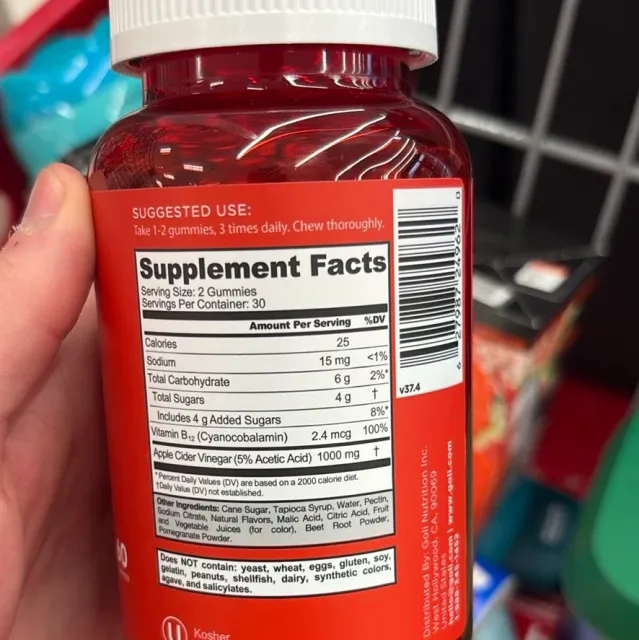
Apple cider vinegar (ACV) is a fermented product rich in acetic acid and polyphenolic compounds, which contribute to its potential health benefits. Research suggests that ACV may support metabolic health through mechanisms related to acetate bioavailability, which peaks within 15–30 minutes of ingestion and returns to baseline by 90 minutes, depending on the form consumed (capsule or liquid) [2]. Animal studies indicate that apple vinegar can reduce liver damage and oxidative stress in high-fat diet models, likely due to its antioxidant polyphenol content [4]. Additionally, ACV contains significant levels of polyphenols such as procyanidins and hydroxycinnamic acids, which vary by apple variety and fermentation method, and contribute to its free radical scavenging activity [5][3][7]. Emerging research also highlights the potential of specialized ACVs, such as those made from anthocyanin-rich red-fleshed apples, to deliver enhanced antioxidant and biofunctional properties [8].
Dosage Guide
Therapeutic Doses
For treatment of specific conditions
Special Forms
Alternative forms for specific needs
Preferred for faster acetate absorption and traditional use
Slower acetate release; convenient for supplementation
Clinical Notes
- Always dilute liquid ACV to prevent esophageal or dental enamel damage due to acidity
- May interact with diuretics, insulin, or potassium-lowering drugs due to potential hypokalemia risk
- Limited long-term safety data; avoid excessive intake (>30 mL/day long-term)
- Capsule form may delay acetate absorption compared to liquid [2]
Research
Nitrogen supplementation during fermentation affects volatile compound profile and aroma of cider, enhancing esters and fatty acids.
Acetate from vinegar drink peaks in serum at 15 min; capsule form peaks later at 30 min, indicating slower absorption.
Apple-derived polyphenols, including those in cider, have antioxidant properties and can improve oxidative stability in foods.
Apple vinegar reduced liver damage and oxidative stress in high-fat-fed rats, improving lipid profiles and antioxidant enzyme levels.
Polyphenol content in cider apples varies widely and contributes to bitterness, astringency, and antioxidant capacity.
UHPLC-MS/MS and UHPLC-UV methods effectively quantify polyphenols in cider apple juice, with good correlation for major compounds.
Sequential co-fermentation with Torulaspora delbrueckii and Saccharomyces cerevisiae enhances polyphenol, flavonoid, and antioxidant content in apple cider.
Vinegar from red-fleshed Niedzwetzky's apple is rich in anthocyanins, vitamin C, and total phenolics, showing high biofunctionality.