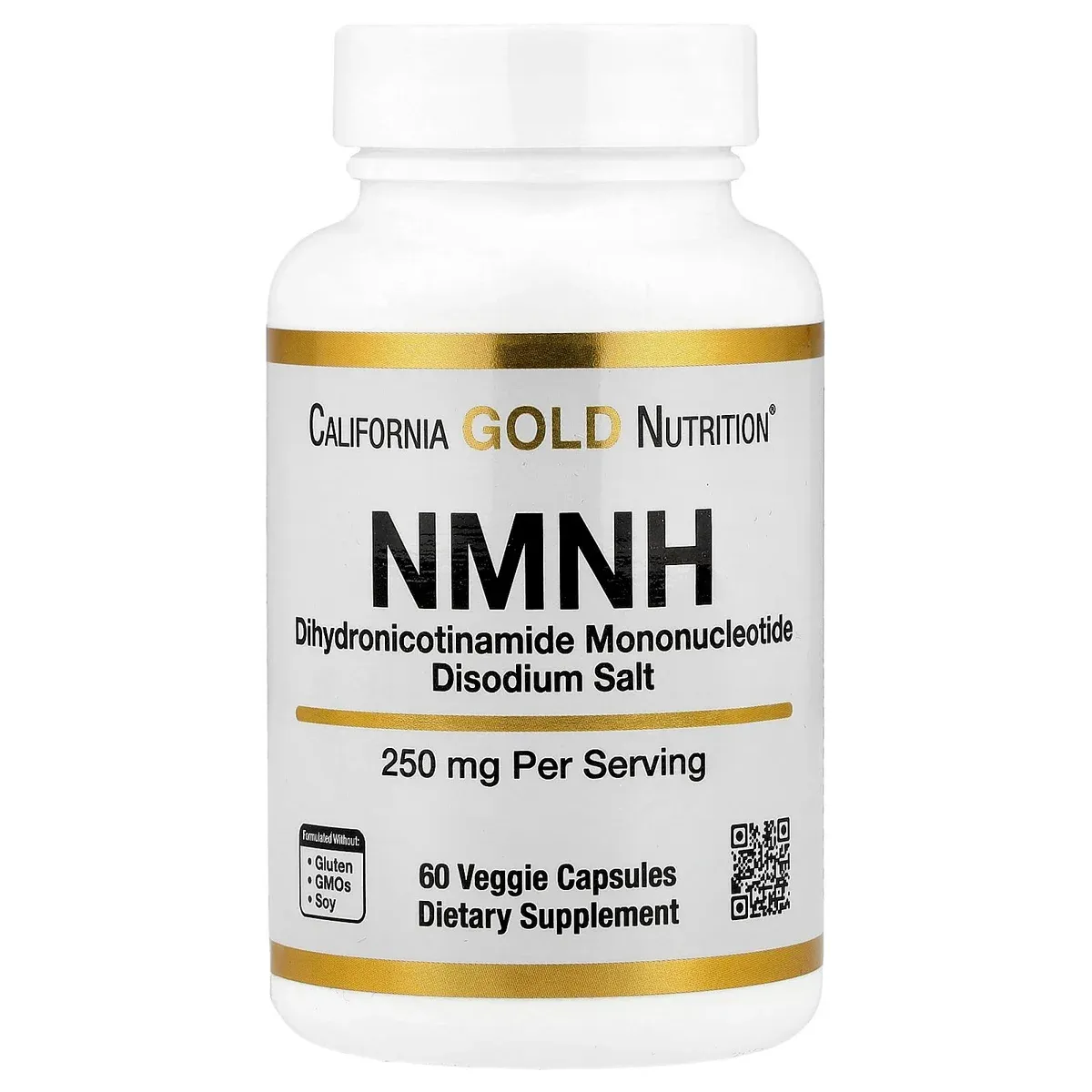
NMNH by California Gold Nutrition is marketed as a longevity and cellular health supplement, centered on dihydronicotinamide mononucleotide (NMNH), a reduced form of nicotinamide mononucleotide (NMN) and a direct precursor to nicotinamide adenine dinucleotide (NAD+). NAD+ is a critical coenzyme involved in mitochondrial function, DNA repair, and activation of sirtuins—proteins implicated in aging and metabolic regulation. As NAD+ levels decline with age, supplementation with precursors like NMNH is hypothesized to support cellular resilience and delay age-related decline.
The primary ingredient, dihydronicotinamide mononucleotide disodium salt (250 mg), is structurally distinct from the more commonly studied NMN and nicotinamide riboside (NR). While preclinical data suggest NMNH may be more potent than NMN in elevating NAD+ levels, human clinical evidence is extremely limited. Current trials on NMN show consistent increases in blood NAD+ concentrations, but no significant improvements in glucose metabolism, insulin sensitivity, or lipid profiles in middle-aged and older adults [1][2]. Furthermore, animal studies raise concerns about potential interference with exercise-induced metabolic benefits [3]. The sodium content (25 mg) is negligible from a nutritional or therapeutic standpoint and serves primarily as a counterion in the disodium salt formulation.
Quick Summary
All ingredient amounts are clearly disclosed with no proprietary blends, allowing full transparency into the formulation.
The primary ingredient (NMNH) is dosed within the clinical range and increases NAD+ levels, but consistent functional benefits such as improved glucose control or physical performance are not supported by current evidence [1][2]. Efficacy is limited to biochemical markers without proven physiological impact.
The disodium salt form may improve solubility, but NMNH's absorption and metabolic fate in humans are poorly studied. Compared to nicotinamide riboside, which has proven superior bioavailability, NMNH lacks robust evidence for efficient uptake and conversion.
The product is likely safe for short-term use based on analog data from NMN and NR, with no serious adverse events reported at similar doses. However, long-term human safety of NMNH is unknown, and theoretical concerns exist regarding methyl group depletion due to nicotinamide metabolism.
Suggested: 1 serving/day to reach clinical midpoint
Why Take This Product
Key Benefits
- Increases NAD+ Levels: Clinical trials demonstrate that NMN supplementation (250–2000 mg/day) significantly elevates blood NAD+ concentrations in humans, suggesting NMNH may have similar effects due to its structural similarity [1][2]. This biochemical effect is the most consistently observed outcome of NAD+ precursor supplementation.
- Supports Cellular Repair Mechanisms: NAD+ is essential for the function of PARPs and sirtuins, enzymes involved in DNA repair and genomic stability. Preclinical models suggest NAD+ repletion may enhance cellular resilience, though direct evidence in humans from NMNH or NMN is lacking.
- Potential Neuroprotective and Metabolic Support: Animal studies indicate NAD+ precursors may protect against neurodegeneration and metabolic dysfunction, but human translation remains unconfirmed. No significant effects on fasting glucose, insulin, or HbA1c were observed in recent meta-analyses of NMN trials [1].
Who Should Take This
Potential Side Effects
Ingredient Breakdown
The formulation contains two ingredients: sodium and dihydronicotinamide mononucleotide disodium salt. The latter is the active compound and primary focus of the product, while sodium is present as a salt stabilizer and contributes minimally to daily intake.
Primary Ingredients
Dihydronicotinamide Mononucleotide Disodium Salt
NAD+ precursor, cellular energy support
Dose falls within the lower end of the studied range (250–2000 mg). While it achieves biochemical efficacy (NAD+ elevation), functional benefits remain unproven in humans. Long-term safety and optimal dosing are unknown.
This reduced form of NMN is designed to boost NAD+ levels, which decline with age and are linked to mitochondrial dysfunction and cellular aging. Human data on NMNH specifically are scarce, but studies on NMN show dose-dependent increases in blood NAD+ without consistent improvements in glucose metabolism or physical performance [1][2]. One mouse study found NMN blunted exercise benefits in obesity [3], raising context-dependent concerns.
Supporting Ingredients
There is 1 supporting ingredient.
Practical Recommendations
- Combine With Lifestyle Interventions: Exercise, calorie restriction, and adequate sleep naturally boost NAD+ levels. Given preclinical concerns about NMN blunting exercise benefits, combining supplementation with physical activity should be approached thoughtfully.
- Monitor For Future Research: NMNH is an emerging compound with limited human data. Stay informed about clinical trials evaluating its long-term effects on aging, cognition, and metabolic health before considering sustained use.
Is it Safe?
The product appears safe for short-term use in healthy adults based on analog data from NMN and NR studies. However, long-term human safety data for NMNH specifically are lacking. The disodium salt form introduces a negligible sodium load, posing no risk to cardiovascular health at this level.
Safety & Considerations
- Long Term Safety: Long-term safety of NMNH in humans has not been established. Chronic use should be approached with caution.
- Methyl Demand: High-dose NAD+ precursors may increase demand for methyl donors (e.g., folate, B12, choline), potentially affecting homocysteine metabolism.
- Exercise Interaction: Preclinical evidence suggests NMN may blunt metabolic benefits of exercise in obese individuals [3]; relevance to humans is unknown but warrants awareness.
The Science
While the primary ingredient increases NAD+ levels—a key biomarker—the functional clinical efficacy of NMNH remains unproven. Human trials on NMN show no consistent improvements in glucose metabolism, insulin sensitivity, or lipid profiles despite elevated NAD+ [1][2]. Animal data even suggest potential interference with exercise benefits [3], highlighting the gap between biochemical and physiological outcomes.
NMN supplementation (250–2000 mg/day) increases NAD+ but does not improve glucose or lipid metabolism in adults.
Systematic review confirming NMN elevates NAD+ without consistent metabolic benefits in humans.
In mice with diet-induced obesity, NMN supplementation reduced the glucose-metabolism benefits of exercise.
High-purity nicotinamide riboside was well tolerated in a 90-day toxicity study, supporting safety of NAD+ precursors.
Nicotinamide riboside bypasses rate-limiting steps in NAD+ biosynthesis, offering potential advantages over other precursors.
See grades while you shop
Get instant supplement ratings directly on iHerb. Amazon & more coming soon.
Works on iHerb now, Amazon & more coming soon
Stay updated on supplement research
Get newsletters about the latest developments in supplements and evidence-based insights.
No spam. Unsubscribe anytime.
Want another product analyzed?
Scan any supplement label for a free analysis