
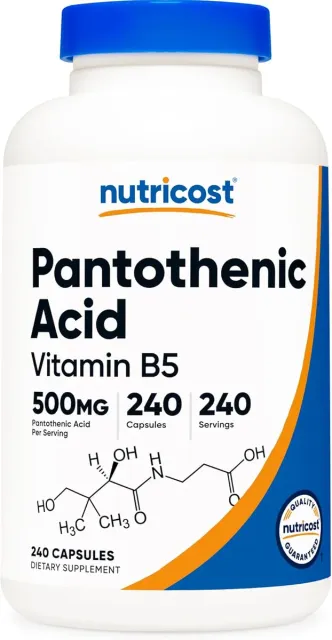
Jarrow Formulas' Pantothenic Acid B5 is a high-potency supplement delivering 500 mg of vitamin B5 in the form of calcium pantothenate, a stable and well-absorbed form. Vitamin B5 is essential for the synthesis of coenzyme A (CoA), a central molecule in energy metabolism, fatty acid synthesis, and the production of steroid hormones and neurotransmitters. This product is designed to support individuals seeking enhanced metabolic function, nerve health, and cellular antioxidant capacity, particularly in contexts of increased physiological demand or suboptimal dietary intake.
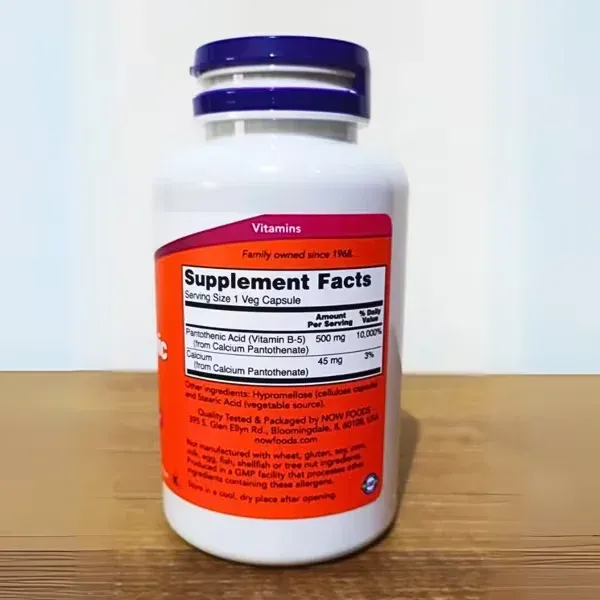
The inclusion of 49 mg of calcium is minimal relative to daily needs and appears to serve primarily as a carrier for the pantothenate molecule rather than as a therapeutic dose. While calcium is vital for bone and cardiovascular health, the amount here is not sufficient to impact these systems directly. The product’s focus remains firmly on high-dose pantothenic acid, aligning with research on its roles in mitochondrial function, nerve regeneration, and redox balance [1][2][3].
Quick Summary
Full transparency is provided with exact amounts for all ingredients and no proprietary blends. The label clearly identifies both vitamin B5 and calcium content.
The 500 mg dose of vitamin B5 exceeds the clinical midpoint (155 mg) for therapeutic use and supports energy, nerve, and antioxidant functions. As a primary ingredient at supraphysiological levels, it drives high efficacy. Calcium is sub-therapeutic but not expected to contribute significantly.
Calcium pantothenate is a stable and well-absorbed form of vitamin B5, earning high bioavailability credit. Calcium form is not specified but is likely bound as pantothenate, which is adequately absorbed.
Vitamin B5 has no known toxicity at high doses, with excess excreted in urine. The 49 mg of calcium poses negligible risk. No significant interactions reported. High-dose B5 may cause mild GI effects, but overall safety profile is excellent.
Suggested: 1 serving/day to reach clinical midpoint
Why Take This Product
Key Benefits
- Supports Energy Metabolism: Vitamin B5 is required for the synthesis of coenzyme A (CoA), a critical cofactor in the citric acid cycle and fatty acid oxidation, enabling efficient ATP production from carbohydrates, fats, and proteins [1].
- Enhances Antioxidant Defenses: Supplementation has been shown to improve antioxidant status in animal models, likely through CoA-dependent synthesis of glutathione and other protective molecules [1].
- Supports Hormone and Neurotransmitter Synthesis: CoA derived from B5 is essential for the production of steroid hormones (e.g., cortisol) and neurotransmitters (e.g., acetylcholine), linking B5 to stress response and cognitive function.
- May Reduce Inflammation in Metabolic Stress: B5 is included in micronutrient regimens targeting oxidative stress and inflammation, such as in viral infections, suggesting a broader role in immune and metabolic resilience [8].
Who Should Take This
Potential Side Effects
Ingredient Breakdown
The formulation centers on high-dose pantothenic acid, with calcium present as a minor component. Primary ingredients are evaluated for clinical efficacy, while supporting ingredients are assessed for contribution to overall health.
Primary Ingredients
Vitamin B5
Coenzyme A synthesis, energy metabolism, antioxidant support, nerve health
Calcium pantothenate is a stable, well-absorbed form. Dose exceeds RDA (5 mg) and therapeutic deficiency dose (10 mg). Falls within upper range of studied doses for metabolic support. Pantethine is more therapeutically active for lipid and neurological conditions.
Pantothenic acid is essential for coenzyme A (CoA) production, critical for energy metabolism, fatty acid synthesis, and neurotransmitter and steroid hormone production. It supports antioxidant defenses and neurological function, with transport into the brain via the sodium-dependent multivitamin transporter [4]. Deficiency is rare but linked to fatigue and neuropathy. High-dose supplementation may enhance mitochondrial and nerve function.
Supporting Ingredients
There is 1 supporting ingredient.
Practical Recommendations
- Consider Pantethine For Therapeutic Use: For lipid management or neurological conditions, pantethine (300–1200 mg/day) is more effective than pantothenic acid due to its direct metabolic activity [2].
- Split Doses If Gastrointestinal Sensitivity: To minimize risk of diarrhea, consider splitting high-dose B5 into multiple servings throughout the day, especially at doses above 1,000 mg.
Is it Safe?
Vitamin B5 has a strong safety profile, with no established upper limit. Calcium supplementation requires caution in certain populations due to potential cardiovascular risks at high doses, though the amount here is negligible.
Safety & Considerations
- Gastrointestinal: High doses of vitamin B5 (>1,000 mg) may cause diarrhea or gastrointestinal discomfort in sensitive individuals.
Reports for Similar Products
The Science
Efficacy is driven by the 500 mg dose of vitamin B5, which exceeds the RDA and falls within ranges studied for metabolic and neurological support. While pantethine is more therapeutically active, high-dose pantothenic acid still offers meaningful biological effects.
Dietary pantothenic acid improved antioxidant status and growth in animal models, supporting its role in redox balance.
Pantethine, a derivative of B5, shows neuroprotective, antioxidant, and anti-inflammatory properties.
Vitamin B5 supports nerve recovery and tissue regeneration, likely via mitochondrial and myelin support.
Pantothenic acid is transported into the brain via the sodium-dependent multivitamin transporter, indicating CNS importance.
Calcium supplements (>500 mg/day) linked to increased myocardial infarction risk.
See grades while you shop
Get instant supplement ratings directly on iHerb. Amazon & more coming soon.
Works on iHerb now, Amazon & more coming soon
Stay updated on supplement research
Get newsletters about the latest developments in supplements and evidence-based insights.
No spam. Unsubscribe anytime.
Want another product analyzed?
Scan any supplement label for a free analysis