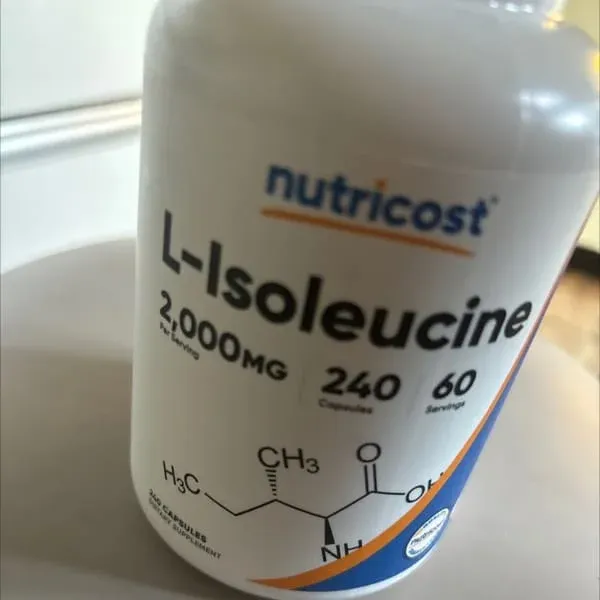
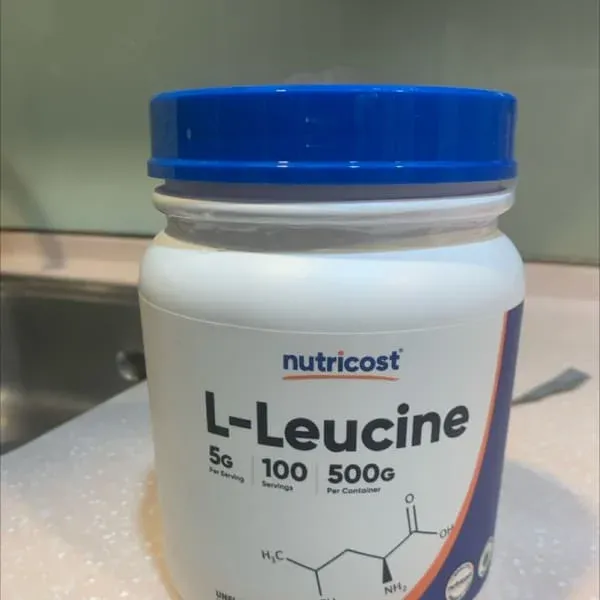
L-Leucine is an essential branched-chain amino acid (BCAA) that plays a pivotal role in regulating muscle protein synthesis (MPS), particularly through activation of the mTOR signaling pathway. It functions not only as a building block for proteins but also as a key metabolic signal that triggers muscle growth, making it a central focus in interventions targeting sarcopenia, malnutrition, and muscle wasting conditions. In older adults, where anabolic resistance can impair muscle response to protein intake, leucine supplementation has been shown to enhance the utilization of dietary amino acids and improve lean mass accrual.
The 2,000 mg dose provided by Nutricost’s L-Leucine falls below the typical clinical range of 3–5 g per day used in most human studies. However, evidence suggests that even lower doses may augment the anabolic response when consumed with low-protein meals or in individuals with suboptimal baseline nutrition [1]. For maximal efficacy, leucine should be integrated into a balanced diet with sufficient total protein and ideally paired with resistance exercise, as synergy between mechanical stimulus and amino acid availability drives optimal muscle adaptation.
Quick Summary
Full transparency: exact amount of L-Leucine is disclosed per serving with no proprietary blends or hidden ingredients.
Moderate efficacy: the 2,000 mg dose is below the clinical range (3–5 g/day) but may still support muscle protein synthesis, especially when combined with resistance training and adequate protein intake. Efficacy improves if 2 servings (4,000 mg) are consumed.
L-Leucine in free-form powder is highly bioavailable and rapidly absorbed, making it effective for acute stimulation of muscle protein synthesis. Free amino acids receive a +10% bioavailability credit due to high absorption rates.
Generally safe for healthy adults, but contraindicated in maple syrup urine disease and may interact with levodopa. Long-term high-dose safety is not fully established, warranting caution with chronic use above 5 g/day.
Suggested: 2 servings/day to reach clinical midpoint
Why Take This Product
Key Benefits
- Enhances Low-Protein Meal Utilization: Adding leucine to low-protein meals increases myofibrillar protein synthesis, helping optimize muscle anabolism in suboptimal dietary conditions [1].
- May Benefit Chronic Liver Disease: BCAA supplementation, including leucine, may reduce sarcopenia and malnutrition in patients with chronic liver disease due to impaired protein metabolism [3].
- Potential Support in Early Cancer Cachexia: Leucine may help maintain protein balance in advanced cancer patients before refractory cachexia develops, though benefits diminish in late stages [5].
Who Should Take This
Potential Side Effects
Ingredient Breakdown
This product contains only one active ingredient: L-Leucine, an essential branched-chain amino acid critical for muscle protein synthesis and metabolic signaling. No additional supportive compounds are included.
Primary Ingredients
L-Leucine
Essential amino acid, mTOR activator, muscle protein synthesis stimulator
Dose is below clinical midpoint of 4,000 mg (from 3,000–5,000 mg range). At 2,000 mg, it provides 67% of the target dose. Evidence shows 5 g maximizes myofibrillar protein synthesis post-exercise [1], suggesting this dose may be suboptimal without multiple servings.
L-Leucine is a branched-chain essential amino acid that serves as both a substrate for protein synthesis and a signaling molecule that activates the mTOR pathway, driving muscle anabolism. It is particularly effective in older adults and those with low protein intake.
Practical Recommendations
- Combine With Resistance Training: Maximize muscle anabolism by taking leucine around resistance exercise sessions, ideally within 1–2 hours post-workout.
- Pair With Protein-Rich Or Fortified Meals: To overcome anabolic resistance, consume leucine with meals—especially low-protein ones—to enhance muscle protein synthesis.
- Consider Higher Dosing For Clinical Goals: For sarcopenia or malnutrition support, aim for 3–5 g per dose; this may require 2–3 servings of the current product.
- Monitor In Chronic Conditions: Use under medical supervision in liver disease, cancer, or Parkinson’s disease due to metabolic and drug interaction considerations.
Is it Safe?
While L-Leucine is safe for most individuals at recommended doses, caution is advised in specific populations such as those with MSUD or Parkinson’s disease. The isolated nature of this supplement allows for precise dosing but requires attention to overall dietary protein balance.
Safety & Considerations
- Contraindication: Do not use if you have maple syrup urine disease (MSUD).
- Drug Interaction: May interfere with levodopa absorption; separate dosing by at least 2–3 hours in Parkinson’s patients.
- Gastrointestinal: High doses may cause nausea, diarrhea, or abdominal discomfort in sensitive individuals.
Reports for Similar Products
The Science
The efficacy of this product hinges on whether the 2,000 mg dose of L-Leucine reaches the threshold required to significantly stimulate muscle protein synthesis. Clinical trials typically use 3–5 g per dose, suggesting this product may be suboptimal unless multiple servings are taken.
Adding leucine to a low-protein beverage enhanced myofibrillar protein synthesis in young men post-exercise; 5 g maximized response.
Leucine supplementation improves sarcopenia-related parameters in older adults, including muscle mass and strength.
L-leucine and BCAA supplementation may improve malnutrition and sarcopenia in chronic liver disease.
5 g/day leucine with resistance training increased fat-free mass and strength in untrained midlife women.
Leucine acts as a signaling molecule to promote protein synthesis in cancer patients before refractory cachexia.
See grades while you shop
Get instant supplement ratings directly on iHerb. Amazon & more coming soon.
Works on iHerb now, Amazon & more coming soon
Stay updated on supplement research
Get newsletters about the latest developments in supplements and evidence-based insights.
No spam. Unsubscribe anytime.
Want another product analyzed?
Scan any supplement label for a free analysis