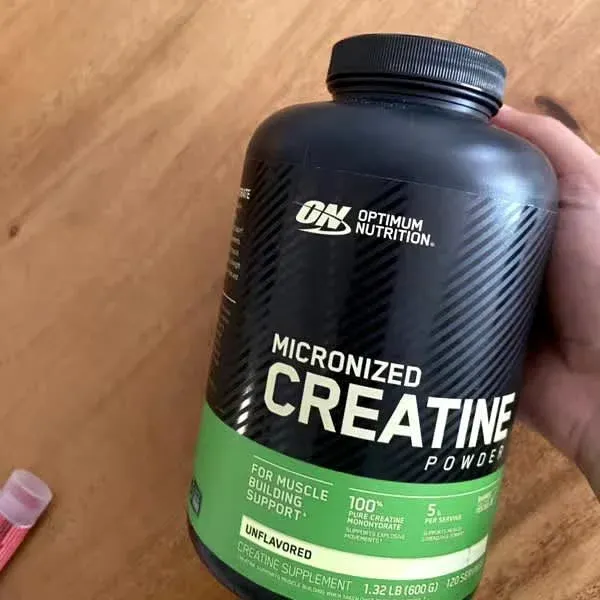
Creatine monohydrate is the gold standard in sports nutrition supplements, with decades of research supporting its efficacy, safety, and bioavailability. This product provides 5 grams per serving of micronized creatine monohydrate, a form shown to enhance intramuscular phosphocreatine stores, enabling faster ATP regeneration during short-duration, high-intensity activities such as weightlifting and sprinting [1][2]. The micronization process improves solubility and mixability, though it does not alter the fundamental bioavailability of creatine itself.
The dose of 5 g/day aligns precisely with the recommended maintenance phase following a loading protocol or as a standalone daily intake to achieve muscle saturation over 3–4 weeks [1]. While a loading phase (0.3 g/kg/day for 5–7 days) can accelerate muscle creatine accumulation, consistent daily dosing at 5 g is effective and well-tolerated long-term. This product contains no additional ingredients, ensuring purity and minimizing potential for adverse reactions or interactions.
Quick Summary
Full transparency: exact amount of creatine monohydrate (5 g) is clearly listed with no proprietary blends or hidden ingredients.
High efficacy due to 5 g of creatine monohydrate per serving, which is at the clinical midpoint (3–5 g) and proven to enhance performance, strength, and lean mass with regular use.
Creatine monohydrate has excellent bioavailability (~95%), and the micronized form enhances dispersion in liquid, improving user experience without altering absorption kinetics.
Excellent safety profile in healthy individuals; no evidence of organ toxicity with long-term use. High-quality manufacturing standards from Optimum Nutrition further support safety.
Suggested: 1 serving/day to reach clinical midpoint
Why Take This Product
Key Benefits
- Greater Lean Mass Gains: Long-term creatine use with resistance training leads to greater increases in fat-free mass compared to placebo, likely due to enhanced training capacity and cell hydration [3].
- Improved Recovery and Injury Prevention: Emerging evidence suggests creatine may reduce muscle damage and inflammation post-exercise, supporting faster recovery and potentially lowering injury risk [2].
- Neuroprotective and Cognitive Benefits: Creatine plays a role in brain energy metabolism, with some studies indicating benefits in cognitive performance under stress, sleep deprivation, or aging [2].
Who Should Take This
Potential Side Effects
Ingredient Breakdown
Each serving contains a single active ingredient: creatine monohydrate. This compound is naturally synthesized in the body and obtained through diet (primarily meat and fish), but supplementation ensures maximal intramuscular saturation for performance and health benefits.
Primary Ingredients
Creatine Monohydrate
Enhances high-intensity exercise performance, increases muscle strength and lean mass
Micronized form improves solubility and mixability. Dose of 5 g/day is at the upper end of the clinical range and sufficient for maintenance or standalone use without loading.
Creatine monohydrate is the most effective and well-studied form of creatine, proven to increase intramuscular phosphocreatine and support ATP regeneration during anaerobic activity. It is safe, well-tolerated, and effective in both males and females [1][3].
Practical Recommendations
- Daily Dosing Without Loading: Take one 5 g scoop daily, with or without food. Muscle saturation occurs within 3–4 weeks, making this a simple and effective approach.
- Accelerated Loading Phase (Optional): For faster saturation, take 20 g per day (split into 4 doses) for 5–7 days, followed by 5 g/day for maintenance [1].
- Timing And Co-Ingestion: While not required, taking creatine with carbohydrates or protein may enhance uptake due to insulin-mediated transport. Post-workout timing may offer slight advantages in muscle accretion.
Is it Safe?
Creatine monohydrate is one of the most studied supplements in sports science, with an excellent safety profile across diverse populations. Long-term studies show no adverse effects on renal, hepatic, or cardiac function in healthy individuals [4][2].
Safety & Considerations
- Renal Impairment: Avoid in individuals with severe renal impairment; monitor kidney function in those with pre-existing kidney disease.
- Hydration: Ensure adequate fluid intake to minimize risk of gastrointestinal discomfort or cramping.
Reports for Similar Products
The Science
The efficacy of this product is driven entirely by its 5 g dose of creatine monohydrate—the most bioavailable and well-researched form. This dose meets clinical standards for maintaining elevated muscle creatine levels and enhancing physical performance.
Effective dosing includes loading at 0.3 g/kg/day for 5–7 days followed by 0.03 g/kg/day maintenance; loading is not required but accelerates saturation.
Creatine is safe and well-tolerated in healthy individuals and various patient populations over short and long durations; supports performance and neuroprotection.
Systematic review in females found no serious adverse events with creatine monohydrate use; safety profile similar to males.
No clinically significant changes in renal, hepatic, cardiac, or muscle function reported with creatine supplementation in short-term studies.
Creatine supplementation (20g/day for 4 days) enhances high-intensity exercise performance in both males and females.
See grades while you shop
Get instant supplement ratings directly on iHerb. Amazon & more coming soon.
Works on iHerb now, Amazon & more coming soon
Stay updated on supplement research
Get newsletters about the latest developments in supplements and evidence-based insights.
No spam. Unsubscribe anytime.
Want another product analyzed?
Scan any supplement label for a free analysis