Overview
Choline is an essential nutrient involved in numerous physiological processes, including phosphatidylcholine biosynthesis, lipoprotein metabolism, neurotransmission (as a precursor to acetylcholine), and methyl group donation for epigenetic regulation [1][2]. It plays a critical role in fetal brain development, and maternal choline supplementation during pregnancy has been associated with improved infant information processing speed and cognitive outcomes, particularly when intake is tightly controlled [7]. While most pregnant women in the U.S. do not meet the recommended intake of 450 mg/day, evidence from randomized trials on long-term child neurodevelopment remains mixed, with some studies showing no significant cognitive benefits from supplementation [3][7][8]. Choline supplementation has also been studied in children with fetal alcohol spectrum disorders (FASD), where it may improve memory and attention deficits [3]. Additionally, forms like alpha-glycerylphosphorylcholine (alpha-GPC) are being explored for their potential to modulate methylation biomarkers such as S-adenosylhomocysteine (SAH), which is linked to cardiovascular and neurological disease risk [4].
Dosage Guide
Recommended Daily Allowance
For generally healthy individuals
Therapeutic Doses
For treatment of specific conditions
Upper Intake Limit
Maximum safe daily intake
3500 mg— Tolerable Upper Intake Level (UL) for adults; higher doses may cause gastrointestinal effects or fishy body odor
Special Forms
Alternative forms for specific needs
Enhanced bioavailability; used in cognitive and methylation support
Common supplemental form; cost-effective
Dietary form found in eggs and soy; also available as supplement
Clinical Notes
- High-dose choline supplementation (above 3.5 g/day) may cause gastrointestinal distress, nausea, diarrhea, or a fishy body odor due to trimethylamine production.
- Choline metabolism is influenced by genetic polymorphisms (e.g., PEMT, MTHFR), which may affect individual requirements.
- In patients with liver or kidney disease, choline metabolism may be impaired; use high-dose supplements with caution.
- Alpha-GPC may increase acetylcholine levels; use cautiously in individuals with Parkinson’s disease or those on cholinergic medications.
Research
Choline supplementation at 10× and 15× basal levels for 4 weeks reduced body weight in rats without significant toxicological effects.
Adequate choline intake during pregnancy supports fetal brain development and may protect against neural and metabolic insults; most pregnant women do not meet recommendations.
Choline supplementation in children with fetal alcohol spectrum disorders may improve memory, executive function, and attention deficits.
A supplement containing alpha-glycerylphosphorylcholine helped lower plasma S-adenosylhomocysteine (SAH) levels in adults with elevated SAH and normal homocysteine.
S-adenosyl-L-methionine (AdoMet) supplementation did not significantly increase plasma homocysteine levels in healthy adults.
Phosphatidylcholine supplementation (750 mg/day) in pregnant women did not enhance infant cognitive function at 10–12 months.
Maternal choline supplementation (930 mg/day vs 480 mg/day) during the third trimester improved infant information processing speed.
Systematic review found limited evidence supporting a strong association between prenatal choline and improved child neurodevelopment in human studies.
Products Containing Choline(2 reports)
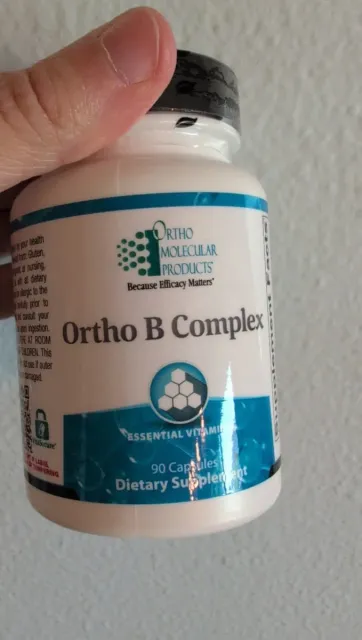
Ortho B Complex is a high-potency B-complex supplement delivering 50 mg each of vitamins B1, B2, B3, B5, and B6, along with 200 mcg B12, 1,360 mcg folic acid (B9), 75 mcg biotin, 19 mg choline, and 50 mg inositol. The formulation emphasizes pharmacological doses of B vitamins, particularly those involved in energy metabolism, homocysteine regulation, and neurological function.

This choline supplement provides 500 mg per serving from choline bitartrate, a cost-effective and widely used form. The dose aligns closely with recommended daily intakes and falls within clinically studied ranges for cognitive and methylation support, particularly in pregnancy and fetal alcohol spectrum disorders.