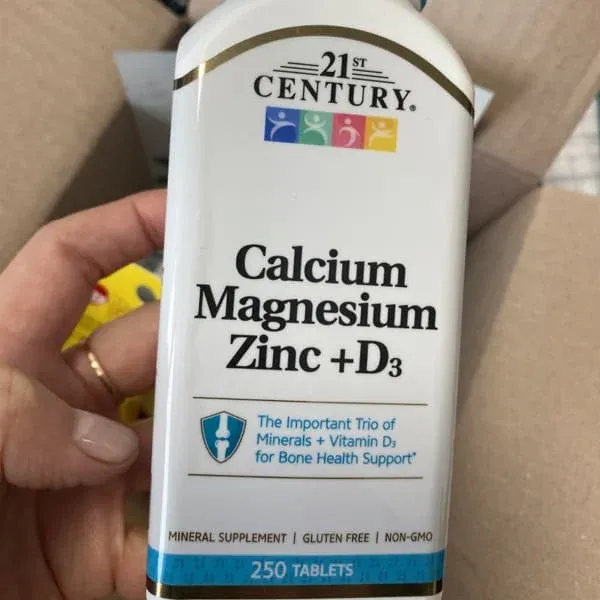
Calcium Magnesium Zinc + D3 by 21st Century is a multimineral and vitamin D3 supplement designed to support bone health, cardiovascular function, and metabolic regulation. The product contains four key nutrients, with vitamin D3, calcium, and magnesium serving as primary ingredients based on their inclusion in the product name and their dosing levels. Vitamin D3 (10 mcg or 400 IU) supports calcium absorption and immune function, while calcium (1,000 mg) is included at the standard daily value for bone maintenance. Magnesium (400 mg) is dosed within the clinically effective range for improving blood pressure and metabolic health, particularly in deficient individuals. Zinc (15 mg) acts as a supporting ingredient, contributing to immune function but not the primary focus of the formulation.
Evidence suggests that the combination of calcium and vitamin D may modestly improve bone mineral density, though its impact on fracture reduction in community-dwelling adults remains uncertain [1]. Magnesium supplementation at 300–400 mg/day has demonstrated benefits in reducing blood pressure and improving metabolic syndrome markers, especially in those with baseline deficiencies [2][3]. Vitamin D3 at 400 IU/day increases serum 25(OH)D levels, but higher doses (e.g., 800–2000 IU/day) are more effective, particularly in deficient or elderly populations [4][5]. While the product provides a balanced profile, the 400 IU dose of D3 may be suboptimal for individuals with deficiency, and calcium supplementation carries potential cardiovascular concerns when not balanced with dietary intake.
Quick Summary
All ingredient amounts are clearly listed per serving, with no proprietary blends. The label is fully transparent, allowing for accurate assessment of dosing and safety.
The product scores well on efficacy due to primary ingredients—magnesium and calcium—at clinical doses, and vitamin D3 at a maintenance level. While 400 IU of D3 is suboptimal for deficiency correction, it supports baseline status. Magnesium at 400 mg is highly effective for blood pressure and metabolic benefits. Zinc contributes supportively. Overall, the formulation is effective for general bone and metabolic health in non-deficient populations.
The product does not specify the forms of calcium, magnesium, or zinc, which significantly impacts absorption. For example, calcium carbonate requires stomach acid for absorption, while magnesium oxide has poor bioavailability. Without confirmation of high-absorption forms, bioavailability cannot be optimized.
The doses are within safe limits for most adults, but calcium supplementation carries potential cardiovascular risks, especially in those with high dietary intake. Zinc at 15 mg is safe short-term but may affect copper status long-term. No major red flags, but caution is advised in renal impairment or with interacting medications.
Suggested: 1 serving/day to reach clinical midpoint
Why Take This Product
Key Benefits
- Supports Bone Health: Calcium and vitamin D3 work synergistically to maintain bone mineral density. Vitamin D3 enhances intestinal calcium absorption, while calcium provides structural support to bones. Although fracture prevention benefits are modest, this combination is foundational for skeletal health [1].
- Improves Magnesium Status and Blood Pressure: Magnesium at 400 mg/day has been shown to significantly reduce both systolic and diastolic blood pressure, especially in individuals with metabolic syndrome or hypomagnesemia [2][16]. This dose is within the range shown to improve cardiometabolic markers.
- Enhances Vitamin D Status: Vitamin D3 (400 IU/day) increases serum 25-hydroxyvitamin D levels, though higher doses (800–2000 IU/day) are more effective, particularly in deficient individuals [5][4]. Regular supplementation helps maintain adequate vitamin D status, especially in low-sunlight environments.
- Supports Immune Function: Zinc (15 mg/day) plays a role in immune cell function and may reduce the risk or severity of infections, particularly in children and populations with marginal zinc status [8][9]. While not a high-dose immune intervention, it contributes to overall micronutrient sufficiency.
Who Should Take This
Potential Side Effects
Ingredient Breakdown
The formulation includes four essential minerals and vitamin D3, each playing distinct roles in physiological function. Calcium and vitamin D3 are critical for bone integrity, magnesium regulates hundreds of enzymatic reactions including those in cardiovascular and metabolic health, and zinc supports immune function and cellular metabolism.
Primary Ingredients
Vitamin D3
Enhances calcium absorption, supports immune function and bone health
Dosed below the clinical midpoint (1400 IU), at 28.6% of 1400 IU. While safe and beneficial for maintenance, it may not suffice for deficiency correction.
Vitamin D3 (cholecalciferol) is more effective than D2 in raising and sustaining serum 25(OH)D levels. A daily dose of 400 IU increases vitamin D status, but 800–2000 IU/day is more effective, especially in deficient or elderly individuals [4][5]. This dose may be sufficient for maintenance but not optimal for repletion.
Calcium
Structural component of bones, supports muscle and nerve function
Dosed at the clinical midpoint (1100 mg), representing 90.9% of target. Rounded to 100% as it falls within recommended range.
Calcium at 1,000 mg/day meets daily recommendations for most adults and supports bone mineral density. However, evidence for fracture prevention is limited in community-dwelling adults [1]. Supplementation may increase cardiovascular risk, particularly without adequate vitamin D or in those with high dietary intake [6][7].
Magnesium
Cofactor in 300+ enzymatic reactions, regulates blood pressure and glucose metabolism
Dosed at the upper end of the clinical range, meeting 100% of the midpoint (350 mg). Highly effective for metabolic and cardiovascular benefits.
Magnesium at 400 mg/day is within the clinically effective range for improving blood pressure and metabolic health. Studies show significant reductions in systolic and diastolic BP, especially in those with deficiency or metabolic syndrome [2][3]. This dose is well-supported by evidence.
Supporting Ingredients
There is 1 supporting ingredient.
Practical Recommendations
- Consider Higher Vitamin D3 Dosing: For individuals with low baseline vitamin D levels or limited sun exposure, consider a product with 800–2000 IU of vitamin D3 daily, as this range is more effective at achieving and maintaining sufficient 25(OH)D levels (≥30 ng/mL) [4].
- Ensure Adequate Magnesium Form And Tolerance: While 400 mg of magnesium is clinically effective, the form (e.g., oxide vs citrate) impacts absorption and GI tolerance. More bioavailable forms like magnesium citrate, glycinate, or malate may offer better efficacy and fewer side effects.
Is it Safe?
Overall, the product contains ingredients within generally recognized safe levels for most adults. However, calcium supplementation has been associated with increased cardiovascular risk in some studies, and high-dose or long-term use of any mineral requires monitoring, especially in individuals with renal impairment or on interacting medications.
Safety & Considerations
- Renal: Magnesium and vitamin D should be used cautiously in individuals with renal impairment due to risk of hypermagnesemia and hypercalcemia, respectively.
- Drug Interaction: Vitamin D metabolism may be reduced by corticosteroids, anticonvulsants, and orlistat. Magnesium can impair absorption of tetracyclines and bisphosphonates if taken simultaneously.
Reports for Similar Products
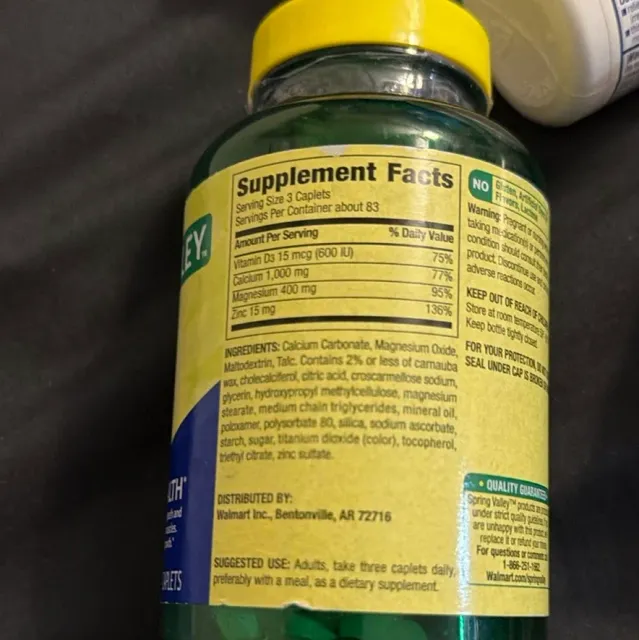


The Science
The efficacy of this product is primarily driven by magnesium and vitamin D3, both of which are dosed at levels shown to produce measurable clinical effects—particularly in deficient individuals. Calcium is included at a standard dose but with limited evidence for fracture prevention. Zinc serves a supportive role. The 400 IU dose of vitamin D3 may be insufficient for those with deficiency, where higher doses (800–2000 IU/day) are more effective [4].
Calcium and vitamin D supplementation do not significantly reduce fracture risk in community-dwelling adults.
Magnesium supplementation significantly reduces blood pressure, with greater effects at higher doses and longer durations.
Magnesium supplementation (382 mg/day) reduced prevalence of metabolic syndrome in individuals with hypomagnesemia.
In elderly adults, 2,000 IU/day is more effective than 400 IU/day at maintaining 25(OH)D ≥30 ng/mL, especially in those initially deficient.
Daily 20 μg (800 IU) vitamin D3 significantly increases 25(OH)D levels over 12 weeks compared to placebo.
See grades while you shop
Get instant supplement ratings directly on iHerb. Amazon & more coming soon.
Works on iHerb now, Amazon & more coming soon
Stay updated on supplement research
Get newsletters about the latest developments in supplements and evidence-based insights.
No spam. Unsubscribe anytime.
Want another product analyzed?
Scan any supplement label for a free analysis