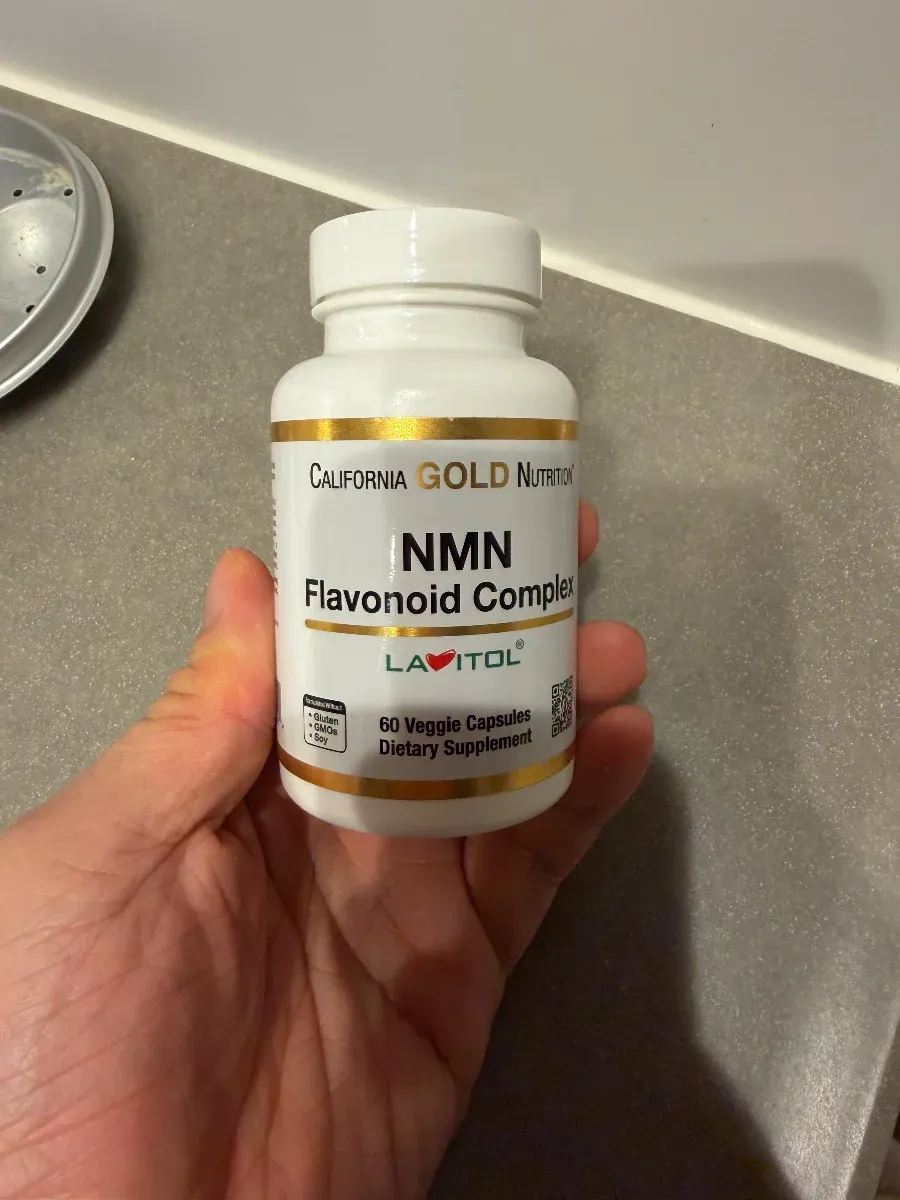
NMN Flavonoid Complex by California Gold Nutrition combines nicotinamide mononucleotide (NMN) with two flavonoids—apigenin and dihydroquercetin—to target cellular health and age-related decline in NAD+ levels. NMN is a direct precursor to NAD+, a vital coenzyme involved in mitochondrial function, DNA repair, and metabolic regulation, all of which decline with age. Clinical studies confirm that oral NMN supplementation effectively raises blood NAD+ levels in humans, with doses ranging from 300 to 900 mg/day showing consistent dose-dependent increases [1][2].
While preclinical data suggest potential benefits for cardiovascular, metabolic, and neurological health, human clinical evidence remains limited and inconsistent. For example, a 12-week trial using 250 mg/day of NMN found no significant improvements in arterial stiffness or insulin sensitivity despite increased NAD+ levels [3]. A recent meta-analysis of 12 RCTs concluded that while NMN reliably elevates NAD+, its effects on glucose metabolism, lipids, and insulin resistance are variable and not clinically robust [4]. Thus, the primary mechanism—NAD+ repletion—is well-supported, but downstream physiological benefits require further validation.
Quick Summary
All ingredient amounts are clearly disclosed with no proprietary blends, ensuring full transparency and enabling informed consumer evaluation.
The primary ingredient NMN is effective at raising NAD+ levels, but the 150 mg dose is well below the clinical range, limiting physiological impact. Supporting flavonoids are dosed too low to contribute meaningfully, resulting in moderate overall efficacy.
NMN is generally well-absorbed orally, with studies confirming systemic NAD+ increases. Flavonoids like apigenin and dihydroquercetin have moderate bioavailability, potentially enhanced by formulation, but no advanced delivery systems are advertised.
Short-term safety is supported for NMN up to 900 mg/day and flavonoids at dietary levels. However, potential drug interactions and lack of long-term data warrant caution, especially in medicated or immunocompromised individuals.
Suggested: 4 servings/day to reach clinical midpoint
Why Take This Product
Key Benefits
- Supports Metabolic Health: While results are inconsistent, some studies suggest NMN may improve insulin sensitivity and glucose metabolism, particularly in older or overweight individuals, though more research is needed [4].
- Potential Vascular Support: Dihydroquercetin may enhance endothelial function and nitric oxide bioavailability, contributing to healthy blood pressure regulation, although clinical evidence is still emerging [7].
- Cellular Longevity Pathways: NMN activates sirtuins—NAD+-dependent enzymes linked to longevity and stress resistance—providing a mechanistic basis for its use in healthy aging regimens.
Who Should Take This
Potential Side Effects
Ingredient Breakdown
The formulation centers on NMN as the primary active ingredient, supported by two flavonoids—apigenin and dihydroquercetin—that provide complementary antioxidant and anti-inflammatory effects. While NMN drives the core biological activity, the flavonoids are included at levels likely too low to exert standalone clinical effects but may contribute to overall cellular protection.
Primary Ingredients
Nicotinamide Mononucleotide
NAD+ precursor, supports cellular energy and repair
Dose is 25% of clinical midpoint (600 mg), suggesting suboptimal potency for robust physiological effects. Well-tolerated up to 900 mg/day with no serious adverse events [2].
NMN is a direct biosynthetic precursor to NAD+, a coenzyme essential for mitochondrial function, DNA repair, and sirtuin activation. Human trials show oral NMN increases blood NAD+ levels dose-dependently over 60 days [1]. However, effects on metabolic and vascular endpoints remain inconsistent [3][4].
Supporting Ingredients
There are 2 supporting ingredients.
Practical Recommendations
- Consider Higher-Dose NMN: For individuals seeking maximal NAD+ elevation, a standalone NMN product with 300–600 mg per serving may offer greater efficacy based on current clinical evidence.
- Monitor For Drug Interactions: Due to flavonoid content, avoid concurrent use with medications metabolized by CYP450 or P-glycoprotein unless approved by a healthcare provider.
- Combine With Lifestyle Interventions: NMN’s effects may be enhanced by exercise, time-restricted eating, and other NAD+-boosting strategies, making it most effective as part of a comprehensive longevity plan.
Is it Safe?
All ingredients appear safe for short-term use in healthy adults, but potential drug interactions and lack of long-term safety data warrant caution. Flavonoids may affect drug metabolism, and NMN’s impact on insulin signaling requires monitoring in diabetic individuals. The product lacks proprietary blends, enhancing transparency, but high-risk populations should consult a healthcare provider before use.
Safety & Considerations
- Drug Interaction: Flavonoids may inhibit CYP450 enzymes and P-glycoprotein, potentially altering levels of anticoagulants, chemotherapy, or metabolic drugs.
- Metabolic Caution: NMN may affect insulin sensitivity; individuals with diabetes or on glucose-lowering medications should use with medical supervision.
- Pregnancy: Safety during pregnancy, lactation, or in immunocompromised individuals has not been established for any ingredient.
Reports for Similar Products
The Science
Efficacy hinges on NMN’s ability to raise NAD+ levels, which is well-documented. However, the 150 mg dose is significantly below the clinical midpoint of 600 mg, limiting its potential for robust physiological effects. Supporting flavonoids are dosed well below levels used in most clinical studies, reducing their contribution. While the product is safe and transparent, its efficacy is moderate due to suboptimal dosing of the primary ingredient.
NMN supplementation at 300, 600, and 900 mg/day significantly increased blood NAD+ levels in a dose-dependent manner over 60 days in healthy adults.
Daily oral NMN at doses up to 900 mg for 60 days significantly increased NAD+ levels and was safe and well-tolerated in healthy middle-aged adults.
Twelve weeks of 250 mg/day NMN supplementation significantly increased serum nicotinamide levels but did not significantly affect arterial stiffness or other metabolic markers in middle-aged adults.
Meta-analysis of 12 RCTs found NMN significantly elevates blood NAD+ levels but shows inconsistent effects on fasting glucose, lipids, and insulin resistance in adults.
Flavonoids such as apigenin show beneficial effects but their potential toxicity and lack of clinical trial validation remain understudied.
See grades while you shop
Get instant supplement ratings directly on iHerb. Amazon & more coming soon.
Works on iHerb now, Amazon & more coming soon
Stay updated on supplement research
Get newsletters about the latest developments in supplements and evidence-based insights.
No spam. Unsubscribe anytime.
Want another product analyzed?
Scan any supplement label for a free analysis