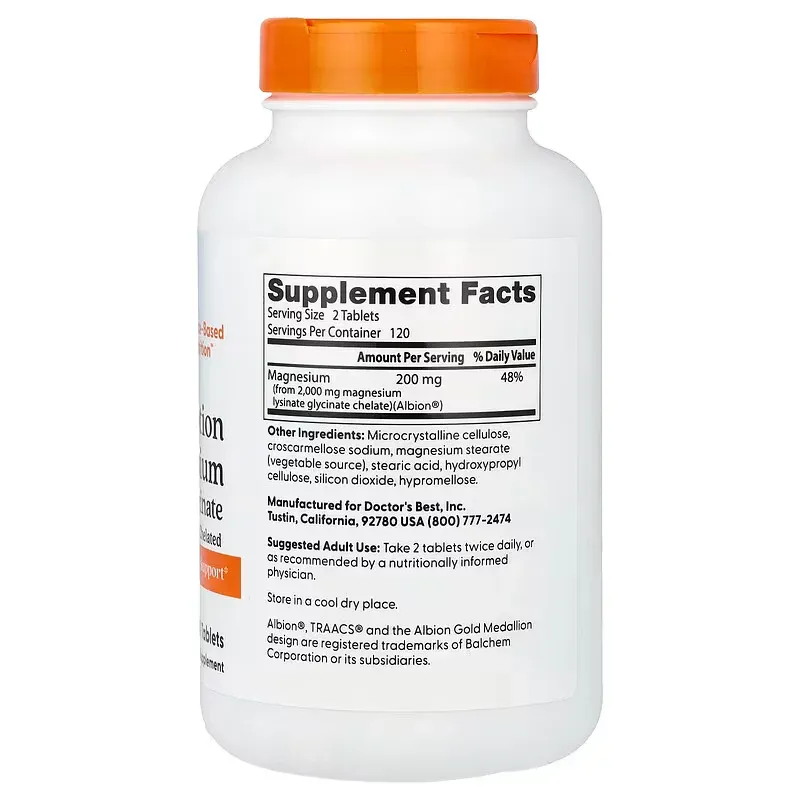
Magnesium is a critical mineral involved in over 300 enzymatic reactions in the body, including those regulating blood pressure, glucose metabolism, and cardiovascular function. Despite its importance, dietary intake of magnesium is often suboptimal, particularly in Western populations, increasing the relevance of supplementation for metabolic and cardiovascular support.
Doctor's Best Magnesium Lysinate Glycinate Chelate delivers 200 mg of elemental magnesium per capsule in a chelated form that enhances absorption and reduces the risk of gastrointestinal side effects such as diarrhea. Clinical evidence indicates that magnesium supplementation, particularly in bioavailable forms like glycinate, can improve metabolic parameters—including blood pressure and HDL-cholesterol—especially in individuals with baseline deficiency or metabolic syndrome [1][2][3]. This product aligns with therapeutic dosing strategies used in research, though higher or multiple servings may be needed to reach full clinical doses.
Quick Summary
Full transparency is provided: the exact form and amount of magnesium (200 mg as lysinate glycinate chelate) are clearly listed per serving, with no proprietary blends or hidden ingredients.
The primary ingredient—magnesium—is present in a highly bioavailable form at 200 mg per serving, which is 67% of the clinical midpoint (355 mg). With bioavailability enhancement, functional efficacy approaches clinical thresholds. Benefits are most evident in magnesium-deficient or metabolically compromised individuals.
Magnesium lysinate glycinate chelate is a highly bioavailable form, with evidence suggesting superior absorption and gastrointestinal tolerance compared to oxide or citrate. Chelation to amino acids enhances intestinal uptake, warranting a +15% bioavailability credit in efficacy assessment.
This product is safe for most adults at recommended doses. The chelated form minimizes gastrointestinal side effects. However, high-dose magnesium can interact with certain antibiotics and bisphosphonates, and renal impairment increases risk of accumulation.
Suggested: 2 servings/day to reach clinical midpoint
Why Take This Product
Key Benefits
- Supports Healthy Blood Pressure: Magnesium supplementation has been shown to modestly reduce both systolic and diastolic blood pressure, particularly in individuals with hypertension or low baseline magnesium levels [1][3]. A dose of 400 mg/day was associated with significant improvements in clinical trials.
- Enhances Magnesium Bioavailability and Tolerance: The lysinate glycinate chelate form is highly absorbable and gentle on the digestive system, reducing the risk of diarrhea compared to oxide or citrate forms—making it suitable for long-term use [4].
- Supports Vitamin D Activation: Magnesium is required for the conversion of vitamin D into its active form. Co-supplementation with magnesium (360 mg/day as glycinate) has been shown to increase 25-hydroxyvitamin D levels more effectively than vitamin D alone [4].
Who Should Take This
Potential Side Effects
Ingredient Breakdown
The formulation centers on a single, well-researched ingredient: chelated magnesium. This form binds magnesium to the amino acids lysine and glycine, enhancing intestinal absorption and reducing osmotic effects in the gut. No additional supporting ingredients are included, which maintains focus on magnesium delivery without filler-related complications.
Primary Ingredients
Magnesium
Essential mineral cofactor for enzymatic reactions, supports metabolic and cardiovascular health
Clinical studies on magnesium for metabolic and cardiovascular benefits typically use 300–410 mg/day. This dose represents 67% of the clinical midpoint (355 mg). High-absorption forms like glycinate receive a +15% bioavailability credit, effectively raising functional dose equivalence. Used in trials for hypertension [1], metabolic syndrome [3], and vitamin D synergy [4].
Provides 200 mg of elemental magnesium in a chelated form bound to lysine and glycine, enhancing absorption and gastrointestinal tolerance. This form is preferred for long-term supplementation due to high bioavailability and low risk of laxative effects.
Practical Recommendations
- Optimize Dosing For Clinical Benefit: For individuals targeting metabolic or blood pressure benefits, consider 2 capsules (400 mg) daily, split into two doses, to reach the clinically effective range of 300–410 mg/day. This aligns with doses shown to reduce blood pressure and improve metabolic parameters [1][3].
- Combine With Vitamin D For Synergistic Effects: Given magnesium’s role in vitamin D metabolism, co-supplementation may enhance cardiometabolic outcomes. A trial combining 360 mg/day magnesium glycinate with vitamin D showed greater increases in 25OHD and greater blood pressure reduction than vitamin D alone [4].
- Monitor Magnesium Status In At-Risk Populations: Individuals with type 2 diabetes, gastrointestinal disorders, or chronic alcohol use may have higher risk of deficiency. While serum magnesium is a limited marker, trends toward normalization of symptoms (e.g., muscle cramps, insomnia) can guide therapy. Avoid high doses in renal impairment.
Is it Safe?
Magnesium is safe for most adults when used within recommended limits. This product uses a gentle, chelated form that minimizes gastrointestinal side effects. However, magnesium can interact with certain medications—including tetracycline and fluoroquinolone antibiotics, as well as bisphosphonates—requiring separation of dosing by 2–4 hours. Individuals with renal insufficiency should exercise caution due to impaired excretion.
Safety & Considerations
- Drug Interaction: Separate dosing from tetracyclines, fluoroquinolones, and bisphosphonates by 2–4 hours to avoid reduced absorption.
- Renal Impairment: Avoid high-dose supplementation in individuals with severe kidney disease due to risk of hypermagnesemia.
Reports for Similar Products


The Science
The efficacy of this product hinges on the dose and form of magnesium provided. At 200 mg per serving, it delivers a meaningful portion of clinically studied doses (300–410 mg/day), particularly for metabolic and cardiovascular support. While slightly below the midpoint of therapeutic ranges, its high bioavailability may compensate, and splitting doses can achieve full clinical intake safely.
Meta-analysis: Magnesium supplementation (mean 410 mg/day) significantly reduced blood pressure, especially in deficient individuals.
250 mg/day of magnesium oxide for 12 weeks increased HDL-cholesterol in prediabetic individuals.
400 mg/day of magnesium improved blood pressure and metabolic profile in metabolic syndrome patients.
Combining magnesium (360 mg/day as glycinate) with vitamin D increased 25OHD and improved BP vs. vitamin D alone.
382 mg/day of elemental magnesium for 16 weeks reduced metabolic syndrome prevalence in hypomagnesemic individuals.
See grades while you shop
Get instant supplement ratings directly on iHerb. Amazon & more coming soon.
Works on iHerb now, Amazon & more coming soon
Stay updated on supplement research
Get newsletters about the latest developments in supplements and evidence-based insights.
No spam. Unsubscribe anytime.
Want another product analyzed?
Scan any supplement label for a free analysis