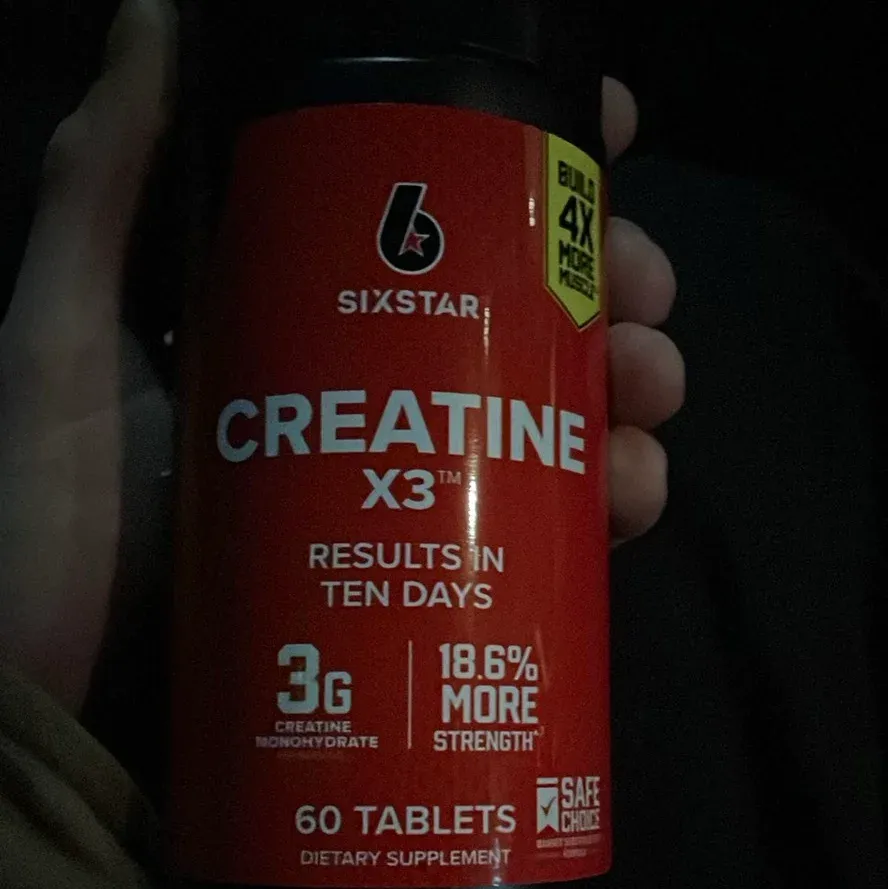
CREATINE X3 by SIXSTAR is formulated to deliver a targeted dose of creatine monohydrate, the gold-standard ingredient for improving anaerobic performance and muscle adaptation. Creatine monohydrate is extensively supported by clinical evidence, with over two decades of research confirming its role in increasing intramuscular phosphocreatine stores, accelerating ATP regeneration during short bursts of intense activity, and promoting gains in strength and fat-free mass across diverse populations [1][2]. The 3,000 mg dose aligns with standard maintenance protocols and is sufficient to maintain saturation in most individuals without requiring a loading phase.
While the product includes trace amounts of sodium and minimal carbohydrate, these contribute negligibly to performance outcomes. The Amino Plus Blend is present in a very low quantity (160 mg), far below therapeutic thresholds for any specific amino acid effect. Other compounds such as glycine, L-arginine, L-methionine, carnosine, and alpha-lipoic acid are listed as 'undetected,' indicating they are either absent or present in insignificant amounts. As such, the efficacy of CREATINE X3 rests almost entirely on its creatine monohydrate content, making it a straightforward, single-ingredient performance supplement despite the branding suggesting a multi-component formula.
Quick Summary
High transparency: all ingredients are disclosed with exact amounts for creatine, sodium, and carbohydrates. The 'undetected' labeling for several ingredients is unusual but honest. No proprietary blend obscures dosing.
High efficacy for its primary purpose—delivering creatine monohydrate at a clinically effective dose (3,000 mg). The product performs well as a single-ingredient creatine supplement, though the 'X3' branding may mislead consumers into expecting multi-component synergy that is not supported by ingredient levels.
Creatine monohydrate is the most bioavailable and well-absorbed form of creatine, with no need for enhanced delivery systems. The formulation uses the optimal compound for efficacy and absorption.
Excellent safety profile. Creatine monohydrate is safe for long-term use in healthy individuals. The low sodium and absence of stimulants or high-dose additives reduce risk. No interactions expected at these doses.
Suggested: 1 serving/day to reach clinical midpoint
Why Take This Product
Key Benefits
- Improved Recovery and Injury Resilience: Emerging evidence suggests creatine may reduce muscle damage and inflammation post-exercise, supporting faster recovery. It may also enhance cellular hydration and reduce cramping or injury risk during intense training [2].
- Neuroprotective and Cognitive Support: Creatine plays a role in brain energy metabolism, and supplementation has shown potential benefits in cognitive performance under stress, sleep deprivation, or during aging, though more research is needed in healthy adults [2].
Who Should Take This
Potential Side Effects
Ingredient Breakdown
The formulation of CREATINE X3 is dominated by creatine monohydrate, the only ingredient present at a clinically relevant dose. All other components—such as the Amino Plus Blend, sodium, and trace carbohydrates—are present in amounts too low to exert meaningful physiological effects. Compounds like glycine, L-arginine, and carnosine are listed as undetected, suggesting they are either not included or below detectable levels.
Primary Ingredients
Creatine Monohydrate
Increases phosphocreatine stores for ATP regeneration during high-intensity exercise
Creatine monohydrate is the most effective, well-researched, and cost-efficient form of creatine. It enhances short-duration, high-intensity performance and supports muscle strength and lean mass gains when combined with resistance training [1][2]. Long-term use is safe in healthy individuals, with no adverse effects on kidney or liver function [3][2].
Supporting Ingredients
There are 9 supporting ingredients.
Practical Recommendations
- Take Consistently With Or Without Food: Creatine monohydrate is effective whether taken with carbohydrates/protein or alone. For optimal adherence, take 1 serving (3,000 mg) daily at any time of day.
- Consider A Loading Phase For Faster Saturation: To rapidly saturate muscles, take 20 g/day (split into 4 doses) for 5–7 days, followed by the maintenance dose of 3,000 mg/day [1].
- Stay Hydrated: Due to creatine’s cell-hydrating effects, ensure adequate daily fluid intake to support performance and comfort.
- Combine With Resistance Training: Maximize benefits by using creatine alongside a structured strength or power training program.
Is it Safe?
Creatine monohydrate is one of the most thoroughly studied supplements in sports nutrition, with an outstanding safety record. The low sodium content (25 mg) poses no cardiovascular concern, and the absence of stimulants or high-dose additives further enhances safety. However, individuals with severe renal impairment should avoid use, and those on medications affecting renal function should consult a healthcare provider.
Safety & Considerations
- Renal Function: Avoid in individuals with severe renal impairment; consult a healthcare provider if you have kidney disease.
- Hydration: Ensure adequate fluid intake due to creatine’s cell-hydrating effects.
Reports for Similar Products
The Science
Efficacy is determined primarily by the presence and dose of creatine monohydrate, which is the most bioavailable and well-researched form. At 3,000 mg per serving, CREATINE X3 delivers a dose supported by clinical evidence for maintaining muscle saturation and enhancing performance. While the product name implies a multi-ingredient 'X3' formula, no other active ingredients are present in effective amounts, limiting synergistic potential.
Creatine supplementation (0.3 g/kg/day loading, 0.03 g/kg/day maintenance) enhances high-intensity exercise performance.
Creatine is safe and effective for improving performance and lean mass in healthy individuals and patient populations.
No clinically significant changes in renal, hepatic, or muscle function with creatine supplementation.
Adding leucine to protein and carbs does not further increase muscle protein synthesis in elderly men.
Sodium intake increases blood pressure, while potassium lowers it in (pre)hypertensive adults.
See grades while you shop
Get instant supplement ratings directly on iHerb. Amazon & more coming soon.
Works on iHerb now, Amazon & more coming soon
Stay updated on supplement research
Get newsletters about the latest developments in supplements and evidence-based insights.
No spam. Unsubscribe anytime.
Want another product analyzed?
Scan any supplement label for a free analysis