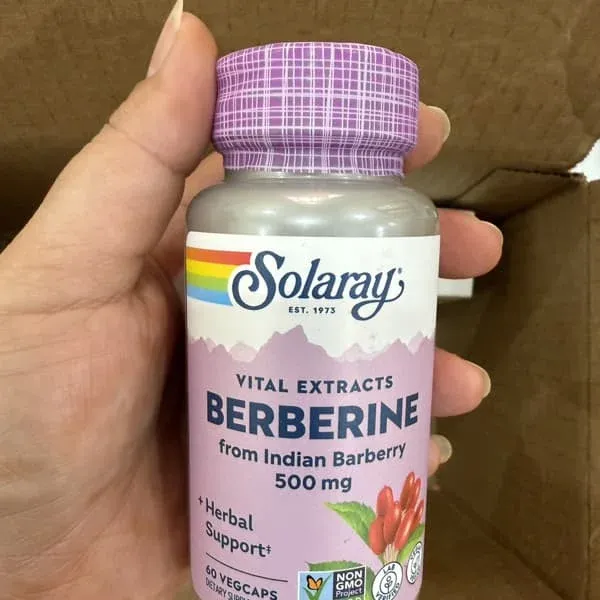
Berberine is a bioactive isoquinoline alkaloid derived from plants such as Berberis vulgaris and Coptis chinensis, traditionally used in Ayurvedic and Chinese medicine. Modern clinical research has validated berberine’s role as a potent metabolic modulator, with multiple randomized controlled trials demonstrating its ability to improve insulin sensitivity, reduce fasting blood glucose, and support weight management. Its primary mechanism involves activation of AMP-activated protein kinase (AMPK), a cellular energy sensor that regulates glucose and lipid metabolism [1][2].
In the context of metabolic syndrome and type 2 diabetes, berberine has shown effects comparable to pharmaceutical agents like metformin, though with a different safety and interaction profile. Doses of 1000–1500 mg/day are commonly used in clinical studies, typically divided into two or three servings. While effective, standard berberine HCl suffers from poor oral bioavailability—often below 1%—due to low intestinal absorption and P-glycoprotein efflux. This has led to the development of advanced forms such as dihydroberberine, which achieves up to 5-fold higher plasma concentrations at lower doses [1]. Despite this, the widespread use of standard berberine in supplements like Vital Extracts, Berberine reflects its established safety and clinical track record when used appropriately.
Quick Summary
Full transparency is achieved: the sole active ingredient is clearly listed with exact dosage (500 mg per capsule), and there are no proprietary blends or hidden components.
The 500 mg dose of berberine HCl is appropriate when taken three times daily (1500 mg/day), aligning with clinical studies showing benefits for glycemic control, weight management, and inflammation [3][2]. However, the use of standard berberine without bioavailability enhancement limits its potential compared to newer formulations.
The product uses standard berberine HCl, which has low oral bioavailability (<1%) due to poor absorption and efflux transporters. While effective at high doses, it lacks advanced delivery systems (e.g., dihydroberberine, liposomal, or phytosome) that enhance absorption and could improve clinical outcomes.
Berberine is generally safe at recommended doses but carries important drug interaction risks and contraindications. The product lacks explicit labeling of these warnings, though the ingredient itself has a well-characterized safety profile when used appropriately.
Suggested: 3 servings/day to reach clinical midpoint
Why Take This Product
Key Benefits
- Promotes Healthy Weight Management: Meta-analyses show berberine reduces body weight, BMI, and waist circumference in a dose-dependent manner, likely through modulation of lipid metabolism and gut microbiota [3]. Effects are most pronounced at doses of 900–1500 mg/day.
- Modulates Gut Microbiota: Emerging evidence suggests berberine exerts part of its metabolic effects by reshaping the gut microbiome, increasing beneficial short-chain fatty acid-producing bacteria [4].
Who Should Take This
Potential Side Effects
Ingredient Breakdown
The formulation contains a single active ingredient—berberine HCl—at a clinically relevant dose. No additional supporting ingredients are present, which enhances transparency but limits synergistic potential.
Primary Ingredients
Berberine HCl
Metabolic support, glycemic control, anti-inflammatory
Berberine HCl is the hydrochloride salt form of berberine, a plant-derived alkaloid with extensive research supporting its role in improving insulin sensitivity, reducing body weight, and lowering inflammatory markers. It activates AMPK, modulates gut microbiota, and influences lipid metabolism.
Practical Recommendations
- Optimize Dosing Schedule: Take one capsule three times daily with meals to align with typical clinical protocols (1500 mg/day) and improve gastrointestinal tolerance.
- Consider Bioavailability-Enhanced Alternatives: If response is suboptimal, consider switching to a formulation with dihydroberberine or phytosomal berberine, which offer superior absorption [1].
- Monitor Blood Glucose And Medication Interactions: Regularly monitor blood glucose if using with hypoglycemic agents. Consult a healthcare provider before combining with prescription drugs metabolized by CYP450 enzymes.
Is it Safe?
While berberine is generally well-tolerated, it has significant pharmacokinetic interactions and contraindications. It inhibits several cytochrome P450 enzymes (e.g., CYP2D6, CYP3A4), increasing the risk of drug toxicity with substrates like statins, anticoagulants, and antihypertensives. It may also displace bilirubin from albumin, posing a theoretical risk of kernicterus in neonates, thus contraindicated in pregnancy.
Safety & Considerations
- Drug Interaction: Berberine inhibits CYP2D6, CYP3A4, and P-glycoprotein, potentially increasing plasma levels of statins, anticoagulants (e.g., warfarin), antihypertensives, and immunosuppressants.
- Pregnancy: Avoid in pregnancy and lactation due to potential to cross the placenta and displace bilirubin, increasing theoretical risk of kernicterus in newborns.
- Gastrointestinal: High doses (>1000 mg/day) may cause gas, bloating, diarrhea, or constipation. Start with lower doses and titrate up.
- Hypoglycemia: May enhance effects of insulin or oral hypoglycemics; monitor blood glucose closely.
Reports for Similar Products

The Science
Efficacy hinges on achieving sufficient plasma concentrations of berberine, which is challenging with standard formulations due to poor bioavailability. While the 500 mg dose per capsule aligns with common clinical regimens, its low absorption may limit therapeutic impact compared to enhanced forms like dihydroberberine.
Review highlighting low bioavailability of standard berberine and superior plasma levels with dihydroberberine; also discusses glycemic effects.
Meta-analysis of 18 RCTs demonstrating berberine reduces IL-6, TNF-α, and CRP with dose-dependent anti-inflammatory effects.
Meta-analysis of 10 RCTs showing berberine significantly reduces BMI, waist circumference, and body weight in a dose-dependent manner.
Systematic review indicating berberine has anti-inflammatory and metabolic effects, potentially acting more like a drug than a typical supplement.
Meta-analysis of 5 RCTs showing berberine significantly reduces serum CRP levels (MD: -0.64 mg/L, p < 0.001).
See grades while you shop
Get instant supplement ratings directly on iHerb. Amazon & more coming soon.
Works on iHerb now, Amazon & more coming soon
Stay updated on supplement research
Get newsletters about the latest developments in supplements and evidence-based insights.
No spam. Unsubscribe anytime.
Want another product analyzed?
Scan any supplement label for a free analysis