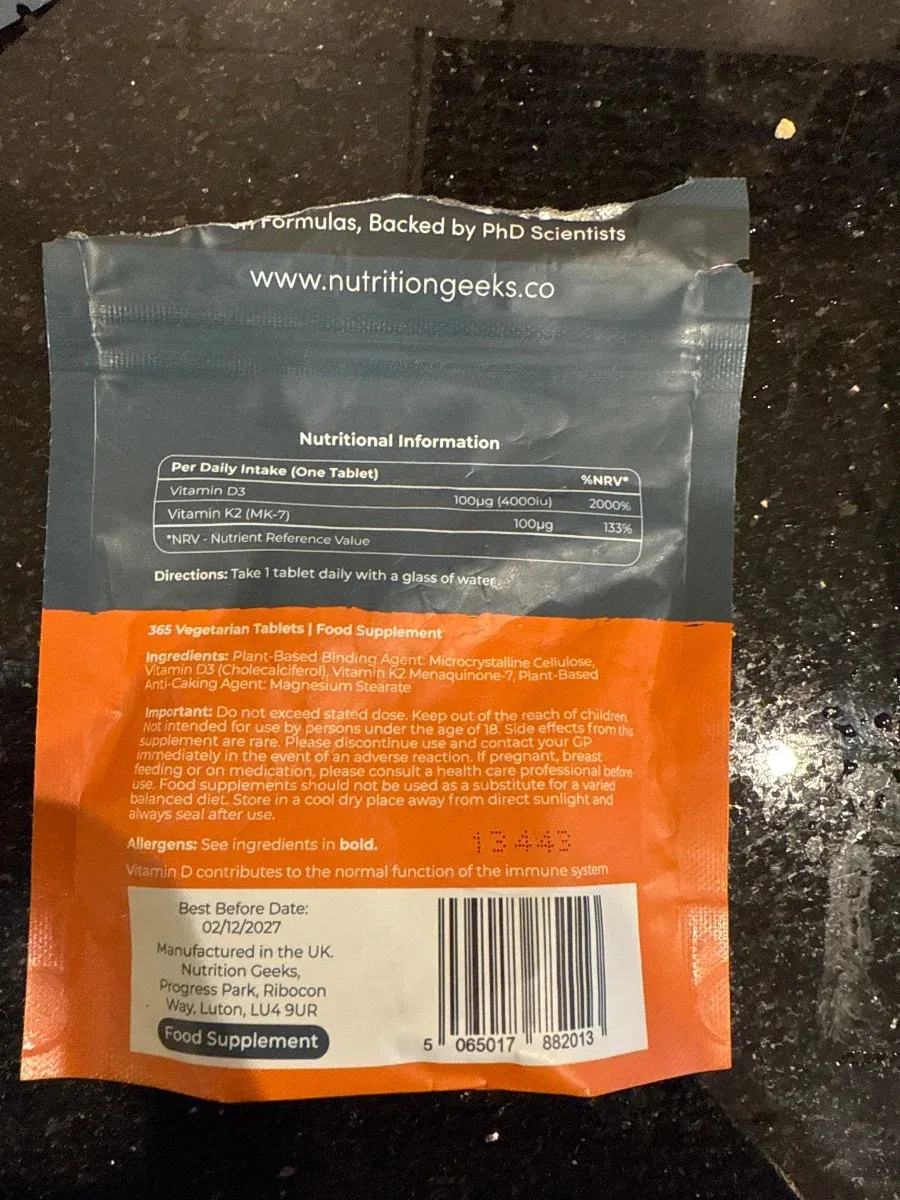
The Vitamin D3 + K2 supplement from Nutrition Geeks delivers a high-dose, evidence-aligned combination of two fat-soluble vitamins critical for calcium metabolism, bone integrity, and vascular health. Vitamin D3 (cholecalciferol) is the preferred form for raising and maintaining serum 25-hydroxyvitamin D [25(OH)D] levels, with a robust body of research supporting its role in immune modulation, musculoskeletal function, and deficiency correction. At 4000 IU per serving, this dose meets the tolerable upper intake level (UL) for adults and is clinically indicated for individuals with insufficiency or those requiring maintenance therapy, particularly in the absence of sufficient sun exposure.
Vitamin K2, specifically in the MK-7 form (implied by typical supplement formulations at this dose), acts synergistically with vitamin D by activating osteocalcin and matrix Gla protein (MGP), thereby directing calcium to bones and away from arteries. While the 100 µg dose of K2 is below some therapeutic ranges studied for osteoporosis or vascular calcification, it falls within the range shown to reduce undercarboxylated proteins and support long-term bone and cardiovascular health when combined with adequate vitamin D. This formulation reflects current scientific understanding of nutrient interplay, particularly the importance of balancing high-dose vitamin D with vitamin K2 to mitigate theoretical risks of vascular calcification.
Quick Summary
All ingredient amounts are clearly listed with no proprietary blends, ensuring full transparency and enabling accurate dose assessment.
The primary ingredient, vitamin D3 at 4000 IU, is at a clinically effective dose for maintaining vitamin D sufficiency. The supporting K2 dose, while below some therapeutic ranges, contributes meaningfully to bone and vascular health in combination with D3, based on synergistic evidence.
The use of vitamin D3 (cholecalciferol) and likely MK-7 form of K2 provides high bioavailability and sustained tissue delivery, particularly for extrahepatic targets like bone and vasculature.
Generally safe for most adults, but high-dose vitamin D requires monitoring to avoid hypercalcemia, and K2 may interact with anticoagulants. Quality indicators are implied but not specified.
Suggested: 1 serving/day to reach clinical midpoint
Why Take This Product
Key Benefits
- Promotes Bone Health Through Synergy: The combination of D3 and K2 enhances osteocalcin carboxylation, improving bone mineralization. Meta-analyses show that co-supplementation significantly increases total bone mineral density compared to placebo [3].
- Supports Cardiovascular Health: Vitamin K2 activates matrix Gla protein, a potent inhibitor of vascular calcification. While long-term outcomes data are pending, biochemical evidence supports its role in protecting arterial health, especially when combined with vitamin D [9].
Who Should Take This
Potential Side Effects
Ingredient Breakdown
Each ingredient is evaluated based on clinical research, dosage, and role in the formulation. Vitamin D3 is the primary active ingredient, responsible for the core therapeutic effect. Vitamin K2 acts as a supporting agent, enhancing the safety and efficacy profile of D3 through synergistic physiological actions.
Primary Ingredients
Vitamin D3
Calcium homeostasis, bone health, immune modulation
Dose aligns with tolerable upper intake level (UL) for adults; suitable for long-term maintenance after deficiency correction. More effective than D2, especially in obese individuals or those with low baseline levels [6].
Cholecalciferol (D3) is the preferred form for supplementation due to superior efficacy in raising and sustaining serum 25(OH)D levels compared to D2. It is essential for calcium absorption and bone mineralization, and plays roles in immune regulation and cell growth. Daily dosing at 4000 IU is effective for maintaining sufficiency, especially in deficient individuals or those with limited sun exposure [1][2].
Supporting Ingredients
There is 1 supporting ingredient.
Practical Recommendations
- Monitor Vitamin D Levels: Regular testing of serum 25(OH)D is recommended to ensure levels remain within the optimal range (40–60 ng/mL) and to avoid potential toxicity with long-term high-dose supplementation.
- Consider Individual Risk Factors: Individuals with sarcoidosis, hyperparathyroidism, or kidney disease should avoid high-dose vitamin D unless under medical supervision due to increased risk of hypercalcemia.
- Avoid With Vitamin K Antagonists: Patients on warfarin or other vitamin K-depleting anticoagulants should not take this product without physician guidance, as K2 can reduce anticoagulant efficacy.
Is it Safe?
Safety considerations include the risk of vitamin D toxicity in predisposed individuals and potential interaction between vitamin K2 and anticoagulant therapies. The product uses forms and doses generally recognized as safe, but medical supervision is advised for high-risk populations.
Safety & Considerations
- Hypercalcemia: Avoid in individuals with hypercalcemia, sarcoidosis, or granulomatous diseases due to risk of vitamin D-induced toxicity.
- Anticoagulant Interaction: Vitamin K2 may reduce the effectiveness of warfarin and other vitamin K antagonists; avoid unless under medical supervision.
- Long Term Monitoring: Serum 25(OH)D and calcium levels should be monitored during long-term use of 4000 IU/day vitamin D.
Reports for Similar Products


The Science
Efficacy is primarily driven by the 4000 IU dose of vitamin D3, which is clinically effective for maintaining optimal 25(OH)D levels. The 100 µg of K2, while below high-dose therapeutic ranges, contributes meaningfully to carboxylation of vitamin K-dependent proteins when combined with D3.
In older adults, 2,000 IU/day was more effective than 400 IU/day at maintaining 25(OH)D ≥30 ng/mL over 6 months.
Vitamin D3 was superior to D2 in raising 25(OH)D levels, especially with daily dosing; effects varied by sex, dose, and time.
Combination of vitamin K and D significantly increased total BMD and reduced undercarboxylated osteocalcin in a meta-analysis of RCTs.
High-dose MK-4 (45 mg/day) maximally reduced undercarboxylated osteocalcin in postmenopausal women with osteoporosis.
Loading doses of 50,000–200,000 IU vitamin D followed by maintenance significantly increased 25(OH)D in deficient adults in a dose-dependent manner.
See grades while you shop
Get instant supplement ratings directly on iHerb. Amazon & more coming soon.
Works on iHerb now, Amazon & more coming soon
Stay updated on supplement research
Get newsletters about the latest developments in supplements and evidence-based insights.
No spam. Unsubscribe anytime.
Want another product analyzed?
Scan any supplement label for a free analysis