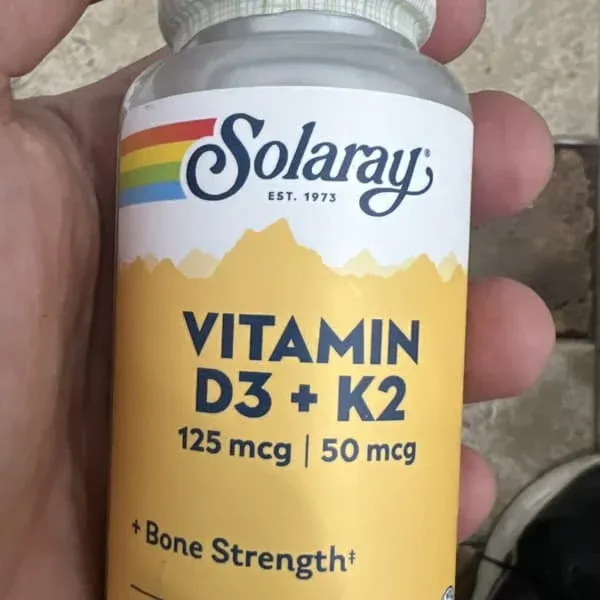
The Solaray Vitamin D3 + K2 formula is designed to address two interrelated aspects of mineral metabolism: calcium utilization and vascular protection. The primary active ingredients—vitamin D3 (cholecalciferol) and vitamin K2 (menaquinone)—work in tandem to optimize skeletal integrity and reduce the risk of ectopic calcification. Vitamin D3 increases intestinal calcium absorption and regulates bone turnover, while vitamin K2 ensures that calcium is properly deposited in bone matrix by carboxylating osteocalcin and prevents arterial calcification by activating matrix Gla protein (MGP).
With 125 mcg (5,000 IU) of vitamin D3 per serving, this product exceeds the Recommended Dietary Allowance (RDA) and aligns with therapeutic dosing strategies used to correct or maintain sufficient 25-hydroxyvitamin D [25(OH)D] levels, particularly in individuals with deficiency, limited sun exposure, or malabsorption. The inclusion of 50 mcg of vitamin K2 supports the biological activity of vitamin D by enhancing the functional maturation of vitamin K-dependent proteins. Although the K2 dose is below some clinical trial levels, it contributes meaningfully to reducing undercarboxylated osteocalcin, especially when combined with adequate D3 status.
Quick Summary
All ingredient amounts are clearly listed with no proprietary blends, allowing full transparency and dose assessment.
The primary ingredient, vitamin D3, is at a clinically effective dose for correcting and maintaining vitamin D status. The synergy with K2, though at a sub-therapeutic dose, still supports bone and vascular health. Efficacy is strong for D3-driven outcomes, with moderate contribution from K2.
The use of vitamin D3 (cholecalciferol) and likely MK-7 (common in K2 supplements) ensures high bioavailability and longer half-life. Fat-soluble vitamins are best absorbed with dietary fat, which is noted in usage recommendations.
Generally safe for most adults, but high-dose D3 requires monitoring to avoid hypercalcemia. Vitamin K2 may interfere with warfarin. Calcium and phosphorus are in safe amounts, though long-term high intakes from multiple sources could pose cardiovascular or renal risks.
Suggested: 1 serving/day to reach clinical midpoint
Why Take This Product
Key Benefits
- Supports Optimal Vitamin D Status: At 125 mcg (5,000 IU), this dose of vitamin D3 effectively raises and maintains serum 25(OH)D levels, particularly in individuals with baseline deficiency or insufficiency [1][2]. Daily dosing of 5,000 IU has been shown to achieve and sustain levels above 30 ng/mL, which is associated with improved immune function and bone health.
- Promotes Bone Health Through Synergy: Vitamin D3 enhances calcium absorption, while vitamin K2 activates osteocalcin, the protein responsible for binding calcium to the bone matrix. Clinical evidence shows that combining D3 and K2 significantly improves total bone mineral density and reduces fracture risk markers more than either nutrient alone [5].
- May Protect Against Vascular Calcification: By activating matrix Gla protein (MGP), vitamin K2 inhibits calcium deposition in arterial walls. Although the 50 mcg dose is modest, it contributes to reducing uncarboxylated MGP, a biomarker of vascular calcification risk. Higher doses (360–720 mcg/day) are being studied for this purpose [10], but even lower doses may offer protective effects when combined with D3.
- Addresses Common Nutrient Gaps: Vitamin D deficiency affects nearly 40% of the U.S. population, and subclinical vitamin K deficiency is common, especially in older adults. This supplement targets both deficiencies simultaneously, offering a preventive strategy for age-related bone and cardiovascular decline.
- Highly Bioavailable Forms Used: The use of cholecalciferol (D3) and likely menaquinone-7 (K2)—common in such formulations—ensures superior absorption and longer half-life compared to synthetic or less stable forms. D3 is more effective than D2 at raising 25(OH)D levels [6], and MK-7 has greater extrahepatic tissue activity than MK-4.
Who Should Take This
Potential Side Effects
Ingredient Breakdown
Each ingredient in this supplement plays a role in calcium metabolism and bone-vascular axis regulation. Vitamin D3 and K2 are the primary actives, working synergistically. Calcium and phosphorus are supporting minerals involved in bone structure, but their inclusion in moderate doses suggests they are not the main focus. The formulation reflects an integrative approach to skeletal and cardiovascular health.
Primary Ingredients
Vitamin D3
Calcium absorption, bone health, immune modulation
The 125 mcg (5,000 IU) dose exceeds standard maintenance but aligns with therapeutic regimens for deficiency. It is effective in dose-dependent increases in 25(OH)D, especially in those with low baseline or higher BMI [6][7]. Daily dosing is preferred for sustained levels.
Vitamin D3 (cholecalciferol) is the preferred form for supplementation due to superior efficacy in raising and sustaining serum 25(OH)D levels compared to D2. It supports calcium homeostasis, bone mineralization, and immune function. Doses of 5,000 IU/day are commonly used for deficiency correction and maintenance in high-risk individuals [1][2].
Vitamin K2
Activates osteocalcin and matrix Gla protein
Although below the 180 mcg/day used in many trials, this dose may provide partial benefit, especially as a supportive agent in a D3 regimen. Higher doses (e.g., 180–720 mcg) are used for maximal vascular protection [10].
Vitamin K2 ensures proper calcium utilization by carboxylating bone and vascular proteins. MK-7 has a long half-life and supports both skeletal and cardiovascular health. While 50 mcg is below typical clinical doses, it may still reduce undercarboxylated osteocalcin when combined with D3 [5].
Supporting Ingredients
There are 2 supporting ingredients.
Practical Recommendations
- Monitor Vitamin D Levels: To ensure safety and efficacy, measure serum 25(OH)D levels before and after 3 months of supplementation. Target range is 30–50 ng/mL (75–125 nmol/L). Avoid long-term use above 10,000 IU/day without medical supervision.
- Avoid With Anticoagulants: Do not take this supplement if you are on warfarin or other vitamin K antagonists unless approved and monitored by a healthcare provider due to potential interaction with INR control.
- Take With Fatty Meal: Since D3 and K2 are fat-soluble, consume with a meal containing fats to maximize absorption and bioavailability.
- Consider Individual Needs: Obesity, malabsorption, and darker skin increase vitamin D requirements. Adjust dose or duration based on baseline status and response. This product may be suitable as a maintenance or correction regimen depending on starting levels.
Is it Safe?
The product contains high-dose vitamin D3, which requires responsible use. While safe for most adults when taken as directed, it necessitates monitoring in susceptible populations. Vitamin K2 is low-risk but contraindicated in patients on vitamin K antagonists. Calcium and phosphorus are within safe limits for general use, though excessive intake from multiple sources could contribute to cardiovascular or renal risks over time.
Safety & Considerations
- Vitamin D Toxicity: Avoid in hypercalcemia, sarcoidosis, or granulomatous diseases. Monitor serum calcium and 25(OH)D with long-term use.
- Drug Interaction: Vitamin K2 may reduce the effectiveness of warfarin and other vitamin K antagonists. Do not use without medical supervision if on anticoagulants.
- Renal Impairment: Caution advised in chronic kidney disease due to potential for mineral imbalance and vascular calcification with prolonged use.
Reports for Similar Products


The Science
The efficacy of this product hinges on the high-dose vitamin D3 and its synergy with vitamin K2. The D3 dose is clinically effective for correcting deficiency and maintaining sufficiency. While K2 is below some therapeutic thresholds, it supports D3 action. The combination is evidence-based for improving bone biomarkers and potentially reducing vascular calcification risk, especially in deficient individuals.
Loading doses of vitamin D3 effectively increase 25(OH)D in deficient adults in a dose-dependent manner.
2,000 IU/day of vitamin D3 was more effective than 400 IU/day at maintaining sufficient 25(OH)D levels in older adults.
Calcium and vitamin D supplementation does not significantly reduce fracture risk in older adults.
Calcium supplements associated with increased risk of myocardial infarction.
Combination of vitamin K and D significantly improves BMD and reduces undercarboxylated osteocalcin.
See grades while you shop
Get instant supplement ratings directly on iHerb. Amazon & more coming soon.
Works on iHerb now, Amazon & more coming soon
Stay updated on supplement research
Get newsletters about the latest developments in supplements and evidence-based insights.
No spam. Unsubscribe anytime.
Want another product analyzed?
Scan any supplement label for a free analysis