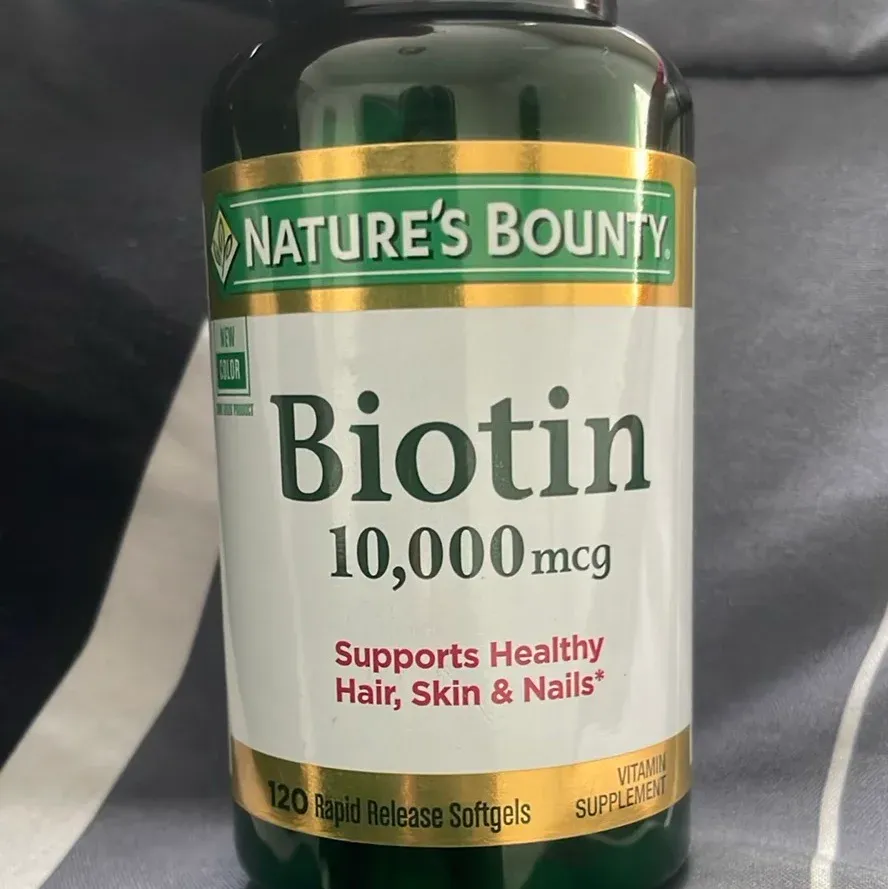
Biotin 10,000 mcg from Nature's Bounty delivers a dose that is over 300 times the recommended daily intake for adults (30 mcg/day). Biotin, also known as vitamin B7, is a water-soluble vitamin critical for carboxylase enzymes involved in energy metabolism, fatty acid synthesis, and amino acid catabolism. It also plays a role in gene regulation and maintaining healthy skin, hair, and nails. Despite its popularity for cosmetic benefits, clinical evidence supporting biotin supplementation for hair and nail growth in individuals without deficiency is weak and largely based on anecdotal reports or small case studies.
High-dose biotin has been investigated in specific medical conditions, such as progressive multiple sclerosis, where doses of 100 mg three times daily (300 mg/day) showed potential for reversing disability in one clinical trial [1]. However, the 10,000 mcg (10 mg) dose in this product is far below that therapeutic range. More concerning is the growing recognition that doses as low as 5–10 mg/day can interfere with immunoassay-based laboratory tests, leading to falsely elevated troponin or falsely low TSH levels, which may result in misdiagnosis of cardiac or thyroid conditions [2][3]. Therefore, individuals taking this supplement should discontinue use at least 48 hours—preferably 7 days—before blood testing.
Quick Summary
Full transparency: the product lists the exact amount of biotin (10,000 mcg) per serving with no proprietary blends or hidden ingredients.
The product delivers a high dose of biotin, which may benefit individuals with brittle nails or confirmed deficiency. However, there is insufficient evidence to support its use for hair or skin health in non-deficient individuals, and the dose is sub-therapeutic for neurological conditions. Overall efficacy for marketed benefits is moderate to low.
Biotin is provided in the D-biotin form, which is the natural, biologically active isomer with high oral bioavailability. No enhancers or alternative delivery systems are needed, and standard tablets are well-absorbed in the small intestine.
While biotin is generally safe, high doses (>5 mg/day) pose significant risks due to interference with immunoassays, potentially leading to misdiagnosis. The product lacks clear warnings about lab test interference on its labeling, reducing safety score.
Suggested: 1 serving/day to reach clinical midpoint
Why Take This Product
Key Benefits
- Supports Nail Strength in Deficient Individuals: Limited evidence suggests biotin supplementation (2.5 mg/day) may improve nail thickness and reduce splitting in individuals with brittle nail syndrome, though data are primarily from small, uncontrolled studies [4].
- Essential for Metabolic Function: Biotin acts as a coenzyme for carboxylases involved in glucose, fatty acid, and amino acid metabolism, making it vital for energy production and cellular function.
- May Support Skin and Hair Health: While often marketed for hair and skin benefits, robust randomized controlled trials do not support biotin supplementation for improving hair growth or skin appearance in non-deficient individuals [4].
- Potential Role in Pregnancy: Marginal biotin deficiency may occur during pregnancy and has been linked to increased risk of birth defects in animal models, suggesting adequate intake is important, though high-dose supplementation is not routinely recommended [3].
- Investigational Use in Neurological Conditions: Doses of 100 mg three times daily (300 mg/day) have been studied in progressive multiple sclerosis, showing a signal toward disability reversal in one trial [1], but this is far higher than the 10 mg provided here.
Who Should Take This
Potential Side Effects
Ingredient Breakdown
The formulation contains only biotin as the active ingredient, delivered in the standard supplemental form D-biotin, which is biologically active and well-absorbed. No additional supporting ingredients are present.
Primary Ingredients
Vitamin B7
Vitamin B7; cofactor for carboxylase enzymes in metabolism, supports skin, hair, and nail health
Dose is 10,000 mcg (10 mg), which exceeds the RDA (30 mcg) by over 300-fold. It is within the range studied for brittle nails (2.5–5 mg/day) but far below the 300 mg/day used in multiple sclerosis trials. Considered primary due to product naming and sole active ingredient status.
Biotin (D-biotin) is the biologically active form of vitamin B7, essential for energy metabolism and macronutrient processing. It is commonly marketed for improving hair and nail strength, though evidence in non-deficient individuals is limited. High doses can interfere with laboratory tests.
Practical Recommendations
- Consult Healthcare Provider Before Use: Especially important for pregnant women, individuals with thyroid or cardiac conditions, or those undergoing regular lab testing.
- Discontinue Before Blood Tests: Stop taking biotin at least 48 hours before lab work, preferably 7 days, to avoid inaccurate results for TSH, troponin, and other immunoassay-based tests.
- Do Not Expect Dramatic Cosmetic Improvements: There is insufficient evidence that biotin supplementation improves hair or nail appearance in healthy individuals without deficiency.
- Consider Lower Doses If Deficient: For confirmed biotin deficiency, doses of 1–5 mg/day are typically sufficient; 10,000 mcg exceeds this and offers no added benefit.
Is it Safe?
While biotin is generally safe, high-dose supplementation carries clinically significant risks due to assay interference. Users must be informed of the need to stop supplementation before blood testing. Quality manufacturing practices are expected from Nature's Bounty, but third-party certification is not specified.
Safety & Considerations
- Lab Interference: High-dose biotin can cause falsely elevated troponin or falsely low TSH levels, leading to incorrect diagnosis of heart attack or thyroid disease. Discontinue at least 48 hours before blood tests.
- Pregnancy: While marginal deficiency may occur in pregnancy, high-dose supplementation should only be used under medical supervision due to potential risks and lack of long-term safety data.
- Therapeutic Use: Do not use for multiple sclerosis without medical supervision; the dose in this product is far below the investigational 300 mg/day regimen.
Reports for Similar Products
The Science
The efficacy of this product for its commonly marketed purposes—hair, skin, and nail health—is not strongly supported by clinical evidence in non-deficient individuals. The dose exceeds nutritional needs but falls far short of therapeutic levels used in neurological conditions. Therefore, benefits are likely minimal for most users.
High-dose biotin (300 mg/day) showed potential efficacy in disability reversal in progressive multiple sclerosis.
High-dose biotin may cause laboratory test interference and other adverse effects.
Marginal biotin deficiency may occur in pregnancy and could increase risk of birth defects.
Evidence for biotin in dermatologic conditions is limited by lack of large RCTs and standardized dosing.
No strong evidence supports routine vitamin supplementation, including biotin, in healthy individuals.
See grades while you shop
Get instant supplement ratings directly on iHerb. Amazon & more coming soon.
Works on iHerb now, Amazon & more coming soon
Stay updated on supplement research
Get newsletters about the latest developments in supplements and evidence-based insights.
No spam. Unsubscribe anytime.
Want another product analyzed?
Scan any supplement label for a free analysis