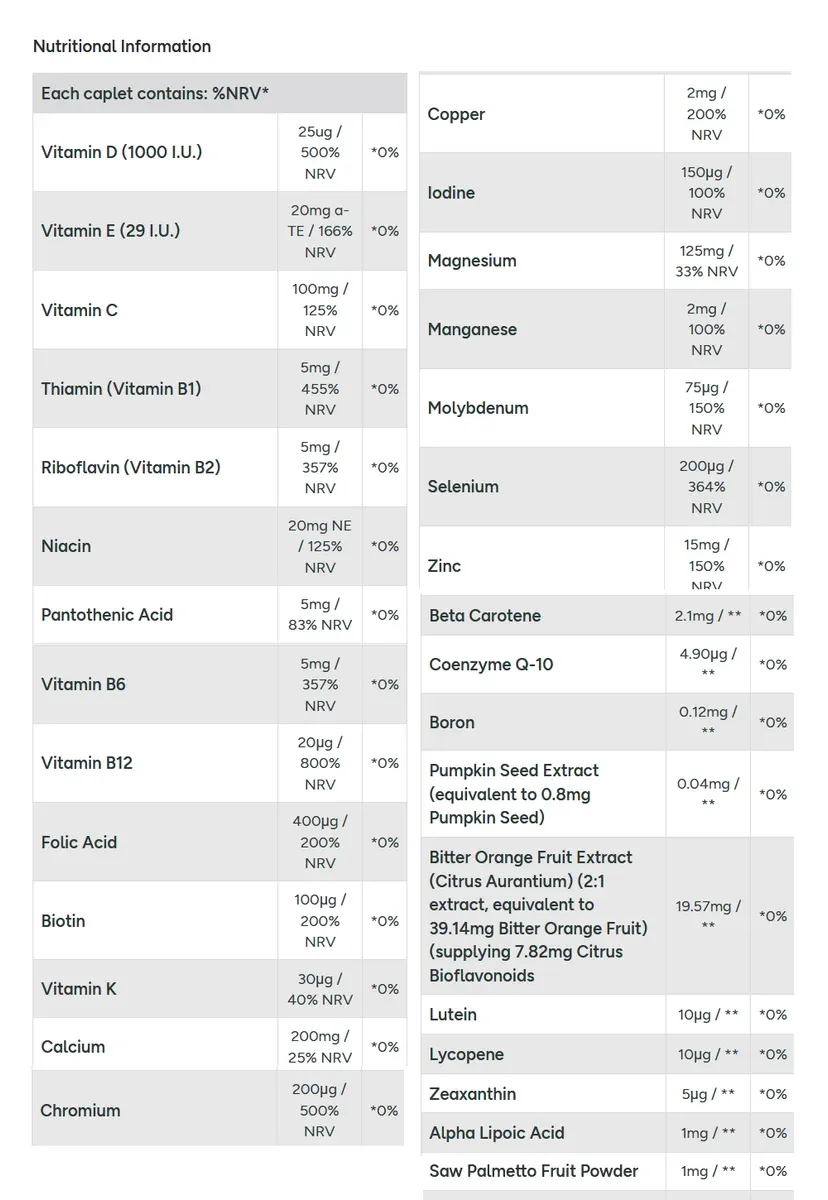
This comprehensive micronutrient supplement features vitamin D at 25µg (1000 IU) per serving, a dose shown in multiple clinical trials to effectively raise and maintain serum 25-hydroxyvitamin D [25(OH)D] levels, particularly in individuals with baseline deficiency or insufficiency. Achieving a 25(OH)D concentration of at least 30 ng/mL is associated with reduced risk of acute respiratory infections and improved bone health, making this a clinically meaningful dose for immune and skeletal support [1][2].
The formula includes a full spectrum of B vitamins at or near recommended dietary allowance (RDA) levels, with vitamin B9 (folic acid) at 400µg—the standard dose for neural tube defect prevention—and supportive doses of B1, B2, B3, B5, B6, and B12. While these B vitamins are not dosed for therapeutic intervention (e.g., homocysteine reduction or neurological treatment), they collectively support energy metabolism, red blood cell formation, and neurological function. Vitamin C (100mg) and E (20mg) provide antioxidant activity, though at levels below those used in high-dose immune or cardiovascular trials.
Quick Summary
All ingredients are fully disclosed with exact amounts. No proprietary blends or hidden fillers, allowing for accurate assessment of dosing and safety.
High efficacy due to vitamin D at a clinically effective dose (1000 IU), which has strong evidence for immune and bone health. Supporting ingredients are present at nutritionally adequate levels, though not optimized for high-dose therapeutic outcomes.
Uses standard, well-absorbed forms (e.g., folic acid, cyanocobalamin, pyridoxine). However, inclusion of activated forms like methylcobalamin, L-methylfolate, or PLP would enhance bioavailability in at-risk populations.
All doses are within safe limits, with no ingredient exceeding tolerable upper intake levels. Vitamin B6 at 5mg poses negligible neuropathy risk, and vitamin E at 20mg is below bleeding risk threshold.
Suggested: 1 serving/day to reach clinical midpoint
Why Take This Product
Key Benefits
- Supports Immune Function: Vitamin D at 1000 IU/day has been shown to reduce the risk of acute respiratory infections, especially in deficient individuals [12]. Vitamin C (100mg) provides additional antioxidant and immune cell support, though higher doses may be needed for significant clinical impact in infection prevention.
- Promotes Metabolic and Neurological Health: The full B-complex supports enzymatic reactions in energy metabolism, neurotransmitter synthesis, and homocysteine regulation. While not at therapeutic doses, these levels help maintain adequate status, which is critical for nerve function and cellular energy production.
- Maintains Bone Health: Vitamin D at 1000 IU/day is effective in improving calcium absorption and maintaining bone mineral density, particularly in older adults or those with low baseline levels [1].
- Antioxidant Protection: Vitamins C and E work synergistically to protect cell membranes and plasma components from oxidative damage. While the dose of vitamin E (20mg) is below high-dose regimens studied for photoprotection, it contributes to overall antioxidant capacity [13].
- Supports Cardiovascular Biomarkers: B vitamins including B6, B9, and B12 contribute to homocysteine reduction, a biomarker linked to cardiovascular risk. Although clinical trials have not shown event reduction, maintaining normal homocysteine levels is considered beneficial for vascular health [10].
Who Should Take This
Potential Side Effects
Ingredient Breakdown
Each ingredient is included at levels intended to meet or exceed RDAs, with vitamin D as the primary active component. The B-complex is balanced to support interdependent metabolic pathways, while antioxidant vitamins C and E provide cellular protection.
Primary Ingredients
Vitamin D
Immune modulation, calcium absorption, bone health
Dose aligns with therapeutic range for insufficiency (20–30 ng/mL). No form specified, but assumed D3 based on common practice.
Vitamin D3 (cholecalciferol) is the preferred form for supplementation due to superior bioavailability and sustained elevation of serum 25(OH)D. This dose (1000 IU) is effective for maintaining sufficiency, especially in deficient individuals [1][2].
Supporting Ingredients
There are 9 supporting ingredients.
Practical Recommendations
- Consider Higher Vitamin C For Immune Support: While 100mg vitamin C meets RDA, doses of 500–1000mg/day may offer greater benefit for respiratory infection prevention, especially under physical stress or in deficient individuals [4].
- Monitor Vitamin D Status: For long-term use, especially in elderly or high-risk individuals, periodic measurement of serum 25(OH)D is recommended to ensure levels remain within optimal range (30–50 ng/mL) without exceeding 100 ng/mL.
- Ensure Adequate Calcium And Magnesium Intake: Vitamin D enhances calcium absorption; co-supplementation with calcium and magnesium supports bone health and prevents potential imbalances [11].
Is it Safe?
The formulation uses safe, well-tolerated doses of all vitamins. No ingredient exceeds established tolerable upper intake levels (ULs), and no proprietary blends obscure dosing. However, users on anticoagulants should exercise caution with vitamin E, and B6 should be monitored if combined with other high-dose supplements.
Safety & Considerations
- Vitamin E And Anticoagulants: High-dose alpha-tocopherol may increase bleeding risk in individuals on warfarin or antiplatelet drugs, though 20mg is low risk.
- Folate And B12 Deficiency: Folic acid can mask hematological signs of B12 deficiency; neurological damage may progress untreated. B12 status should be assessed in long-term users.
Reports for Similar Products
The Science
The product scores highly on efficacy due to the primary inclusion of vitamin D at a clinically effective dose (1000 IU/day), which has strong evidence for immune and bone support. Supporting ingredients are present at nutritionally adequate levels, though not optimized for therapeutic outcomes such as migraine prevention or homocysteine-lowering.
Vitamin D3 at 2000 IU/day more effective than 400 IU in achieving 25(OH)D ≥30 ng/mL in elderly.
Evidence supports thresholds in vitamin D status below which disease risk increases; supplementation benefits deficient individuals.
Gamma-tocopherol may be more effective than alpha-tocopherol in cancer prevention due to anti-inflammatory properties; high-dose alpha-tocopherol depletes delta- and gamma-tocopherols.
Vitamin C supplementation modestly reduces respiratory infection duration, especially in stressed or deficient individuals.
Adjuvant thiamine (100 mg/day) improves depressive symptoms in major depressive disorder.
See grades while you shop
Get instant supplement ratings directly on iHerb. Amazon & more coming soon.
Works on iHerb now, Amazon & more coming soon
Stay updated on supplement research
Get newsletters about the latest developments in supplements and evidence-based insights.
No spam. Unsubscribe anytime.
Want another product analyzed?
Scan any supplement label for a free analysis