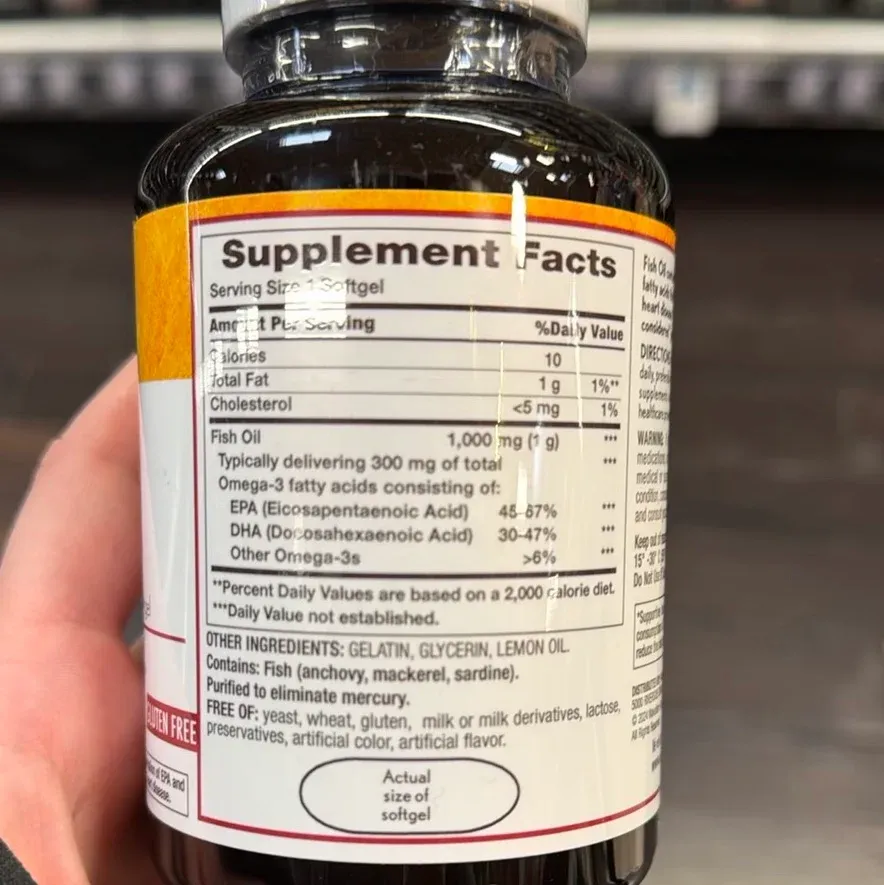
Fish Oil 1000mg by ShopRite is an over-the-counter omega-3 fatty acid supplement derived from marine sources, delivering 300 mg of combined eicosapentaenoic acid (EPA) and docosahexaenoic acid (DHA) per 1,000 mg softgel. The product contains a mixture of EPA (45–87% of total omega-3s) and DHA (30–47%), with other omega-3s making up over 6% of the total. While omega-3 polyunsaturated fatty acids (ω-3 PUFAs) are well-established for their anti-inflammatory, cardioprotective, and neuroprotective properties, the clinical efficacy of supplementation is highly dependent on dose, formulation, and baseline patient status.
Evidence from large randomized trials indicates that high-dose omega-3s—particularly purified EPA (icosapent ethyl) at 4 g/day—are effective in reducing major adverse cardiovascular events (MACE) in high-risk patients on statins with elevated triglycerides [1]. However, general fish oil supplements like this one, which provide less than one-third of the therapeutic dose, are unlikely to confer significant cardiovascular protection in most populations. The American Heart Association and other guidelines do not recommend low-dose OTC fish oil for primary or secondary prevention without specific indications.
Quick Summary
High transparency: all ingredient amounts are clearly listed, no proprietary blends, and ranges for EPA/DHA are disclosed. Full disclosure supports informed consumer choice.
Low efficacy for therapeutic use: the 300 mg of combined EPA+DHA is well below the 1,000–4,000 mg/day range shown to improve cardiovascular outcomes, reduce triglycerides, or support heart failure [3][1]. Suitable only for maintenance in low-risk individuals.
Moderate bioavailability: likely in ethyl ester form (common in OTC fish oil), which requires dietary fat for optimal absorption. Taking with meals is recommended. Triglyceride or re-esterified forms would offer superior absorption.
Generally safe at recommended doses. Low risk of bleeding or LDL elevation due to sub-therapeutic omega-3 content. No evidence of contamination, but third-party testing not confirmed.
Suggested: 4 servings/day to reach clinical midpoint
Why Take This Product
Key Benefits
- Supports Cardiovascular Health: Omega-3 fatty acids, particularly EPA and DHA, help reduce triglycerides, improve endothelial function, and stabilize atherosclerotic plaques. While this product provides sub-therapeutic levels, regular intake may modestly support heart health, especially in individuals with low fish consumption [2][8].
- May Reduce Systemic Inflammation: EPA and DHA serve as precursors to specialized pro-resolving mediators (SPMs) that actively resolve inflammation. Supplementation increases circulating SPMs, particularly in individuals with low baseline omega-3 status [4].
- Modulates Oxidative Stress: Despite susceptibility to oxidation, omega-3s may exert antioxidant effects in vascular tissues by reducing reactive oxygen species and inflammatory markers [6].
- Contributes to Daily Nutrient Needs: For adults not consuming fatty fish twice weekly, this supplement provides a portion of the recommended 250–500 mg/day of combined EPA and DHA to maintain omega-3 status [7].
Who Should Take This
Potential Side Effects
Ingredient Breakdown
The primary active ingredients in this product are EPA and DHA, long-chain omega-3 fatty acids derived from fish oil. The formulation includes other omega-3s and minimal cholesterol and calories. Absorption is enhanced when taken with fat-containing meals.
Primary Ingredients
Omega Fatty Acids
Source of omega-3 fatty acids (EPA and DHA)
The 1000 mg fish oil delivers 300 mg of combined EPA and DHA, typical of ethyl ester formulations. Bioavailability improves when taken with meals.
Provides the base oil from which EPA and DHA are derived. The total fish oil content is standard for OTC supplements, but the active omega-3 concentration determines clinical utility.
Omega Fatty Acids
Primary bioactive components for cardiovascular and neurological benefits
Combined EPA and DHA content is critical for therapeutic effects. This dose is below the clinical threshold for most indications.
EPA
Anti-inflammatory, cardioprotective omega-3 fatty acid
Using midpoint of 198 mg vs. clinical 1,500 mg/day, this provides only 13%. Even for depression (1–2 g/day EPA-dominant), this falls far short.
EPA reduces triglycerides, inflammation, and cardiovascular events. Doses ≥1 g/day are associated with significant myocardial infarction risk reduction [2].
DHA
Neuroprotective and retinal-supportive omega-3 fatty acid
Midpoint of 115.5 mg vs. 1,000 mg clinical dose = 12%. Inadequate for cardiovascular or cognitive therapeutic use.
DHA supports brain and eye health. Pregnant women are advised 200–300 mg/day, which this product partially meets. Therapeutic cardiovascular doses are higher.
Supporting Ingredients
There are 4 supporting ingredients.
Practical Recommendations
- Consider Higher-Dose Or Prescription Alternatives: For individuals with hypertriglyceridemia or high cardiovascular risk, consider prescription icosapent ethyl (4 g/day), which has proven cardiovascular benefit [1]. Re-esterified triglyceride (rTG) or phospholipid-bound forms (e.g., krill oil) may offer better bioavailability than ethyl esters.
- Prioritize Dietary Sources: Consuming fatty fish (e.g., salmon, sardines) twice weekly provides EPA and DHA along with other beneficial nutrients. This is preferred over low-dose supplements for general health.
- Ensure Product Freshness: Choose fish oil supplements with added antioxidants (e.g., vitamin E), stored in dark bottles and kept refrigerated after opening to minimize oxidation and rancidity.
Is it Safe?
Fish oil is generally safe at recommended doses. This product contains less than 5 mg of cholesterol and 1 g of fat per serving, posing minimal cardiovascular risk. Third-party testing for contaminants (e.g., mercury, PCBs) is not specified, so purity cannot be confirmed.
Safety & Considerations
- Bleeding Risk: High-dose omega-3s (>3 g/day) may increase bleeding risk, especially with anticoagulants. This product is unlikely to pose significant risk at standard doses.
- Oxidation: Fish oil is prone to oxidation, which reduces efficacy and may increase inflammation. Choose products with vitamin E and check expiration dates.
- Surgery: Discontinue high-dose omega-3s at least 7–10 days before surgery due to potential antithrombotic effects.
Reports for Similar Products
The Science
Efficacy of omega-3 supplementation is dose-dependent. Clinical benefits for cardiovascular outcomes are primarily observed with ≥1 g/day of EPA+DHA, and robust evidence supports 4 g/day of icosapent ethyl for high-risk patients. This product provides only 300 mg of combined EPA+DHA, limiting its therapeutic potential.
High-dose icosapent ethyl (4 g/day) significantly reduces cardiovascular events in high-risk patients on statins with elevated triglycerides.
Omega-3 supplementation with ≥1 g/day EPA reduces myocardial infarction risk by 14–19%.
Higher doses (≥1 g/day) of omega-3 PUFAs improve left ventricular ejection fraction in heart failure patients over ≥12 months.
Supplementation with EPA and DHA increases pro-resolving lipid mediators, especially in individuals with low baseline fish intake.
Omega-3 LCPUFA supplementation during pregnancy improves perinatal outcomes and prolongs gestation.
See grades while you shop
Get instant supplement ratings directly on iHerb. Amazon & more coming soon.
Works on iHerb now, Amazon & more coming soon
Stay updated on supplement research
Get newsletters about the latest developments in supplements and evidence-based insights.
No spam. Unsubscribe anytime.
Want another product analyzed?
Scan any supplement label for a free analysis