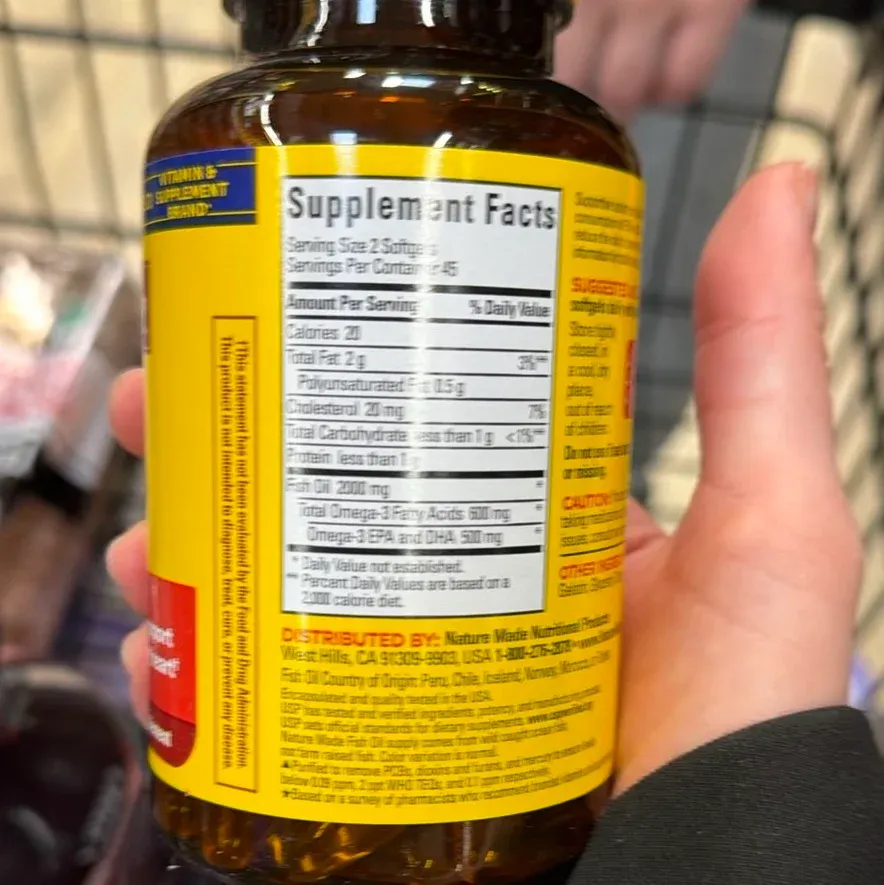
Nature Made Fish Oil is a dietary supplement designed to support cardiovascular, cognitive, and inflammatory health through the provision of omega-3 fatty acids—specifically eicosapentaenoic acid (EPA) and docosahexaenoic acid (DHA). These essential polyunsaturated fats are not synthesized efficiently by the body and must be obtained through diet or supplementation. The product delivers 500 mg of combined EPA and DHA per serving, which aligns with general maintenance recommendations but is below the higher doses studied for therapeutic applications such as hypertriglyceridemia or secondary cardiovascular prevention.
Research indicates that omega-3 fatty acids exert cardioprotective effects via anti-inflammatory, antiarrhythmic, and triglyceride-lowering mechanisms. While large trials like REDUCE-IT demonstrated significant cardiovascular risk reduction with high-dose, purified EPA (icosapent ethyl) at 4 g/day in high-risk patients on statins [1], this product contains less than half that EPA dose and does not specify the EPA:DHA ratio or chemical form (e.g., ethyl ester vs. triglyceride). As such, it is best suited for general health maintenance rather than targeted disease management.
Quick Summary
All key ingredients and their amounts are clearly listed, with no proprietary blends obscuring dosages. This allows for accurate assessment of dosing and comparison with clinical evidence.
The 500 mg dose of EPA+DHA supports general cardiovascular and mental health but is below the 2–4 g/day range shown to significantly reduce cardiovascular events in high-risk populations [1][2]. As a primary ingredient at sub-therapeutic dose, efficacy is moderate for maintenance but limited for disease management.
The product likely uses ethyl ester or natural triglyceride form, but the specific form is not disclosed. Since ethyl esters require food for optimal absorption and have lower bioavailability, the lack of form specification limits confidence in delivery efficiency.
The dose is well below the 5 g/day upper limit and poses minimal bleeding risk for most users. However, oxidation risk and potential interactions with anticoagulants should be monitored, and product freshness is critical to avoid pro-inflammatory byproducts.
Suggested: 2 servings/day to reach clinical midpoint
Why Take This Product
Key Benefits
- Cardiovascular Support: Omega-3 fatty acids, particularly EPA and DHA, are associated with reduced risk of cardiovascular events, improved lipid profiles, and lower triglyceride levels. Doses ≥1 g/day have been shown to improve left ventricular function in heart failure patients over time [4], though this product provides 500 mg, which may support baseline heart health but not achieve maximal therapeutic effect.
- Anti-Inflammatory Effects: EPA and DHA modulate inflammatory pathways, including the production of pro-inflammatory eicosanoids and cytokines. This anti-inflammatory action may benefit individuals with chronic inflammatory conditions or those seeking to reduce systemic inflammation linked to aging and metabolic disease [20].
- Mental Health and Neuroprotection: Higher EPA-dominant omega-3 supplementation (1–2 g/day) has demonstrated antidepressant effects in clinical trials, likely through modulation of neuroinflammation and neuroplasticity [5]. While this product contains 500 mg of EPA+DHA, it may contribute modestly to mood support, especially in individuals with low baseline intake.
- Improved Omega-3 Index: Supplementation increases erythrocyte EPA and DHA levels in a dose-dependent manner, with an omega-3 index (O3I) >8% associated with lower cardiovascular mortality. Achieving this target often requires 1–2 g/day of EPA+DHA, suggesting this product may require multiple servings or combination with dietary sources to reach optimal tissue saturation [3][13].
- Antioxidant Activity in Vascular Tissues: Despite their susceptibility to oxidation, omega-3 fatty acids may paradoxically reduce oxidative stress in vascular endothelial cells, contributing to improved vascular function and reduced atherosclerotic progression [6].
Who Should Take This
Potential Side Effects
Ingredient Breakdown
The primary active components in this product are long-chain omega-3 fatty acids—EPA and DHA—derived from fish oil. These are classified as primary ingredients due to their presence in clinically relevant amounts and alignment with the product name. Supporting compounds include natural antioxidants to stabilize the oil, though specific additives are not detailed in the input.
Primary Ingredients
Omega Fatty Acids
Source of omega-3 fatty acids (EPA and DHA)
The 2000 mg dose aligns with common supplement ranges. However, efficacy depends on the concentration of active EPA and DHA within this oil.
Provides the base lipid matrix from which EPA and DHA are derived. The total fish oil content indicates the crude extract before concentration.
Total Omega-3 Fatty Acids
Cardiovascular and metabolic support
Only 600 mg of omega-3s are provided, which is 30% of the 2000 mg clinical midpoint (3000 mg) for therapeutic use in hypertriglyceridemia and cardiovascular risk reduction.
Represents the sum of all omega-3s in the fish oil, primarily EPA and DHA. This is a key metric for evaluating potency.
Omega-3 EPA and DHA
Anti-inflammatory, cardioprotective, neuroprotective
At 500 mg, this is 50% of the 1000 mg clinical midpoint for cardiovascular risk reduction. While adequate for general health, it falls short of therapeutic dosing (≥2 g/day) shown to reduce cardiovascular events [2].
The combined amount of eicosapentaenoic acid (EPA) and docosahexaenoic acid (DHA), the two most biologically active omega-3 fatty acids.
Practical Recommendations
- Optimize Absorption: Take with meals, especially those containing fat, to enhance absorption—particularly important if the omega-3s are in ethyl ester form, which has lower bioavailability without food.
- Ensure Product Quality: Choose fish oil supplements that are third-party tested for purity and oxidation markers (e.g., peroxide value, anisidine value). Look for products with added antioxidants like vitamin E to prevent rancidity.
- Monitor Clinical Goals: For individuals targeting cardiovascular risk reduction or triglyceride lowering, consider higher-dose prescription options like icosapent ethyl (4 g/day) under physician guidance. For general wellness, this product may suffice when combined with dietary sources.
- Consider Formulation Differences: Re-esterified triglyceride (rTG) or phospholipid-bound (krill) forms may offer better bioavailability than standard ethyl esters. If absorption is a concern, upgrading formulation may allow lower doses to achieve similar tissue levels.
Is it Safe?
Omega-3 supplements are generally safe at recommended doses, with FDA recognizing up to 5 g/day of EPA+DHA as safe. However, quality, formulation, and drug interactions must be considered. This product contains moderate-dose omega-3s, reducing bleeding risk concerns, but users should verify freshness and avoid use in severe seafood allergies.
Safety & Considerations
- Drug Interaction: Use caution when combining with anticoagulants (e.g., warfarin, aspirin) due to potential increased bleeding risk, although this is more relevant at higher doses (>3 g/day).
- Allergy: Not suitable for individuals with fish or seafood allergies; consider algal oil alternatives.
- Quality Concern: Fish oil is prone to oxidation; ensure product is fresh, stored properly, and contains antioxidants like vitamin E to maintain efficacy and safety.
Reports for Similar Products
The Science
Efficacy depends on achieving sufficient tissue levels of EPA and DHA, which is influenced by dose, chemical form, baseline status, and duration of use. While this product delivers a moderate 500 mg of EPA+DHA, it falls short of the 2–4 g/day doses shown to significantly reduce cardiovascular events in high-risk populations [1][2]. It may support general health but is not optimized for therapeutic outcomes.
High-dose icosapent ethyl (4 g/day purified EPA) significantly reduces major adverse cardiovascular events in high-risk patients on statins with elevated triglycerides.
Dose-response analysis shows greater cardiovascular risk reduction with omega-3 doses ≥2 g/day, especially at 4 g/day in high-risk populations.
EPA+DHA supplementation increases omega-3 index dose-dependently; baseline status and formulation influence response.
Doses ≥1 g/day of omega-3 PUFAs improve left ventricular ejection fraction in heart failure patients, with benefits increasing over ≥12 months.
Omega-3 fatty acids, especially EPA, show antidepressant effects via modulation of neuroinflammation and neuroplasticity, though trial results are inconsistent.
See grades while you shop
Get instant supplement ratings directly on iHerb. Amazon & more coming soon.
Works on iHerb now, Amazon & more coming soon
Stay updated on supplement research
Get newsletters about the latest developments in supplements and evidence-based insights.
No spam. Unsubscribe anytime.
Want another product analyzed?
Scan any supplement label for a free analysis