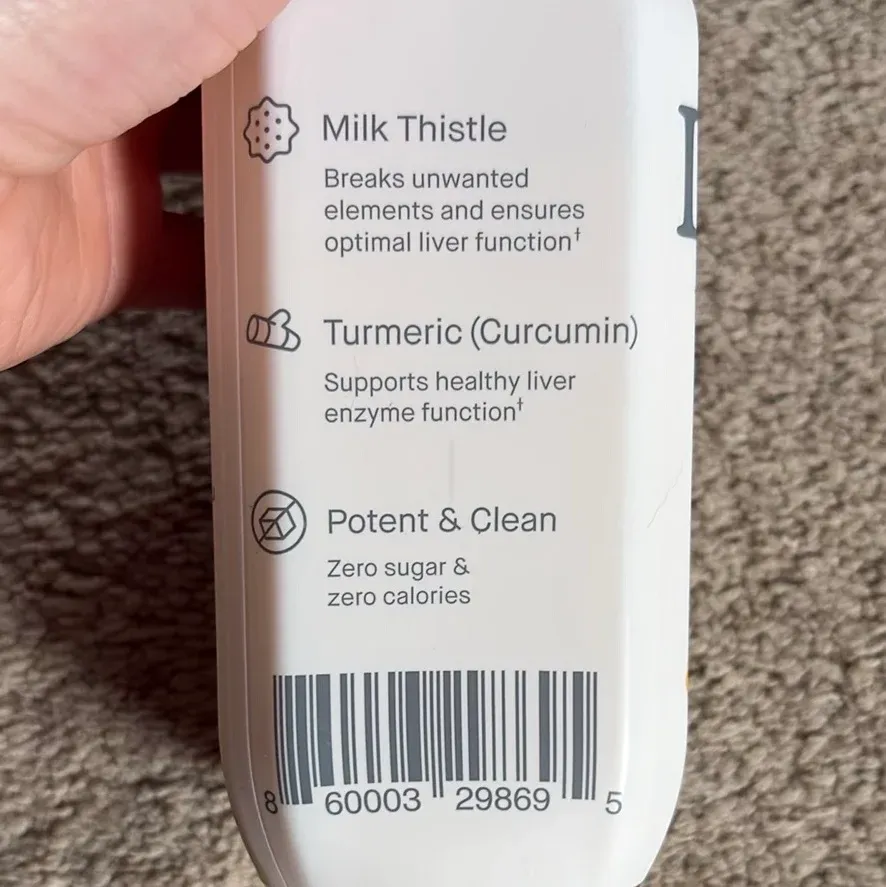
Dose for your liver is positioned as a dietary supplement targeting liver health, yet its formulation is dominated by electrolytes—sodium (50 mg) and potassium (90 mg)—which play no direct therapeutic role in liver function. While electrolyte balance is important systemically, these minerals are not primary agents for hepatic detoxification, regeneration, or protection against fatty liver disease. The absence of active botanical ingredients typically associated with liver support—such as milk thistle (silymarin), dandelion root, or curcumin—undermines the product's core claim.
Furthermore, the inclusion of a 435 mg proprietary blend with undisclosed components significantly limits transparency and raises concerns about the actual presence of effective liver-protective compounds. Given that sodium and potassium are essential minerals commonly obtained through diet, supplementing them in such low amounts does not address liver-specific pathophysiology like oxidative stress, inflammation, or lipid accumulation in hepatocytes. Thus, the formulation appears misaligned with evidence-based approaches to liver health.
Quick Summary
Very poor transparency due to 'undetected' levels of key ingredients and inclusion of a 435 mg proprietary blend with no disclosure of components. This prevents meaningful evaluation of the product's composition or safety.
Efficacy for liver support is negligible. Primary ingredients (turmeric, dandelion, milk thistle) are undetected, and supporting electrolytes have no established role in liver disease. The product fails to deliver clinically relevant doses of any hepatoprotective agent.
Bioavailability cannot be assessed due to absence of active ingredients. Even if present, forms like standard curcumin or silymarin without phytosome or nanoparticle delivery have low absorption. No evidence of advanced delivery systems used.
The declared ingredients at these doses are low-risk for healthy individuals, but the proprietary blend introduces unknown safety concerns, including potential allergens or drug interactions. Sodium and potassium, while safe at these levels, could contribute to imbalances in sensitive populations if combined with other sources.
Suggested: 10 servings/day to reach clinical midpoint
Why Take This Product
Key Benefits
- Electrolyte Balance Support: The sodium (50 mg) and potassium (90 mg) content may contribute to general electrolyte balance, particularly in individuals with mild depletion due to sweating or diuretic use. However, these doses are minimal compared to daily requirements and unlikely to produce a measurable physiological effect.
- Potential Antioxidant or Anti-inflammatory Effects (Theoretical): If the proprietary blend contains bioactive compounds from turmeric, dandelion, or milk thistle, there could be indirect benefits on oxidative stress and inflammation—key drivers of liver disease. However, without disclosure of ingredient amounts and given their 'undetected' status, these effects remain speculative and unsupported by formulation data.
- Low Risk of Acute Adverse Events: Due to the low doses of sodium and potassium and the absence of high-risk compounds, the product is unlikely to cause immediate harm in healthy individuals. This makes it relatively safe, though not necessarily beneficial.
Who Should Take This
Potential Side Effects
Ingredient Breakdown
The product contains two declared ingredients—sodium and potassium—at nutritionally insignificant levels for liver health. Three key botanicals—turmeric, dandelion, and milk thistle—are listed as 'undetected,' suggesting they are either absent or present in trace amounts. A 435 mg proprietary blend conceals the identity and quantity of additional components, limiting the ability to assess efficacy or safety.
Primary Ingredients
Turmeric Extract
Anti-inflammatory, antioxidant, hepatoprotective
Despite likely being a named or implied ingredient, undetectable levels mean no clinical effect. Hepatoprotective potential only at adequate doses (500–1000 mg/day) with proper formulation [18].
Turmeric, particularly curcumin, has demonstrated benefits in reducing liver enzymes and improving lipid profiles in NAFLD [3]. However, its poor bioavailability requires enhanced formulations. 'Undetected' status suggests absence or negligible levels, rendering it ineffective.
Dandelion Extract
Hepatoprotective, choleretic, antioxidant
No active dose present. Potential diuretic and hypoglycemic effects, but irrelevant here due to absence.
Dandelion extract shows promise in animal models for reducing hepatic lipid accumulation and improving metabolic markers [4][5]. However, human data are limited, and 'undetected' levels mean no meaningful contribution to liver support in this product.
Milk Thistle Extract
Hepatoprotective, antioxidant, antifibrotic
Gold standard for herbal liver support, but absent here. Silybin phytosome formulations preferred for bioavailability [39].
Milk thistle (silymarin/silybin) is one of the most studied liver-support supplements. Clinical trials show improvement in liver enzymes and histology in NASH at doses of 420–700 mg three times daily [6]. 'Undetected' status indicates no active ingredient delivery.
Supporting Ingredients
There are 4 supporting ingredients.
Practical Recommendations
- Avoid For Liver-Specific Support: Do not rely on this product for managing fatty liver, elevated liver enzymes, or detoxification. Evidence-based alternatives include standardized milk thistle extract (silybin phytosome, 140–420 mg/day) or curcumin formulations with enhanced bioavailability (500–1000 mg/day).
- Prioritize Transparent Formulations: Choose supplements that fully disclose ingredient amounts and use clinically studied doses of active compounds. Avoid proprietary blends when possible, especially for serious health goals like liver protection.
- Focus On Lifestyle Interventions: For liver health, prioritize weight management, reduced alcohol intake, control of blood sugar and lipids, and a diet rich in antioxidants from whole foods—strategies with far stronger evidence than this supplement.
Is it Safe?
While the declared mineral content is too low to pose acute risks in most individuals, the presence of a proprietary blend without full disclosure raises safety concerns. Electrolyte supplements can interact with cardiovascular and renal medications, and hidden herbal ingredients may affect liver enzymes or coagulation pathways. Individuals with chronic diseases or those taking prescription drugs should exercise caution.
Safety & Considerations
- Electrolyte Imbalance: Chronic use with other supplements or medications affecting sodium/potassium may disrupt balance, especially in elderly or those with kidney disease.
- Hyperkalemia Risk: Potassium supplementation, even in small amounts, should be avoided in individuals with renal impairment or on ACE inhibitors, ARBs, or spironolactone.
- Proprietary Blend Risk: Undisclosed ingredients may interact with medications or cause allergic reactions, particularly in individuals sensitive to Asteraceae plants (e.g., dandelion, milk thistle).
Reports for Similar Products
The Science
The efficacy of Dose for your liver for liver support is highly questionable. Sodium and potassium do not have established roles in treating or preventing liver disease. The absence of detectable levels of evidence-backed hepatoprotective agents like silymarin or curcumin, combined with the lack of dosing transparency, means the product fails to meet the threshold for clinically meaningful liver support.
Potassium supplementation significantly reduced systolic blood pressure by 4.48 mmHg in hypertensive individuals.
Potassium supplementation lowers blood pressure in hypertensive subjects, especially with low baseline intake.
Turmeric/curcumin significantly reduces total cholesterol, LDL-C, and triglycerides in patients with cardiovascular risk factors.
Dandelion leaf extract reduced hepatic lipid accumulation and improved serum lipid and glucose profiles in high-fat-diet-fed mice.
Dandelion polysaccharides reduced serum triglycerides, total cholesterol, and LDL-cholesterol while increasing HDL-cholesterol in atherosclerotic mice.
See grades while you shop
Get instant supplement ratings directly on iHerb. Amazon & more coming soon.
Works on iHerb now, Amazon & more coming soon
Stay updated on supplement research
Get newsletters about the latest developments in supplements and evidence-based insights.
No spam. Unsubscribe anytime.
Want another product analyzed?
Scan any supplement label for a free analysis